
Baby (0–12 months)Free — baby's first 3 months
Month 2: Social Smiles & Cooing Chats
This activity encourages early social communication and strengthens neck muscles as your baby begins to become more aware of the world around them.
Ready right nowNo materials needed ✨ 5 min Ages 1–2 months 1–2 players Indoor
Neck and upper body strength (tummy time)Visual tracking and focusSocial responsiveness (smiling, cooing)Auditory discrimination (recognizing voices)Early communication skills
Materials
Setup
- 1Prepare a quiet, well-lit space on the floor. Lay out a firm play mat or a soft blanket on a clean, safe surface. Ensure there are no distractions or hazards nearby.
Step-by-step instructions
- MILESTONES THIS MONTH: Around month 2, many babies begin to smile socially, coo, and attend to faces. They might be able to hold their head up for short periods during tummy time, track objects with their eyes, and bring their hands to their mouth. Babies are also starting to connect sounds they hear with faces.
- WHEN TO CALL YOUR PEDIATRICIAN: If your baby is not responding to loud sounds, not watching things as they move, not bringing hands to mouth, or seems very floppy or very stiff, consult your pediatrician to discuss these observations. Early intervention is key.
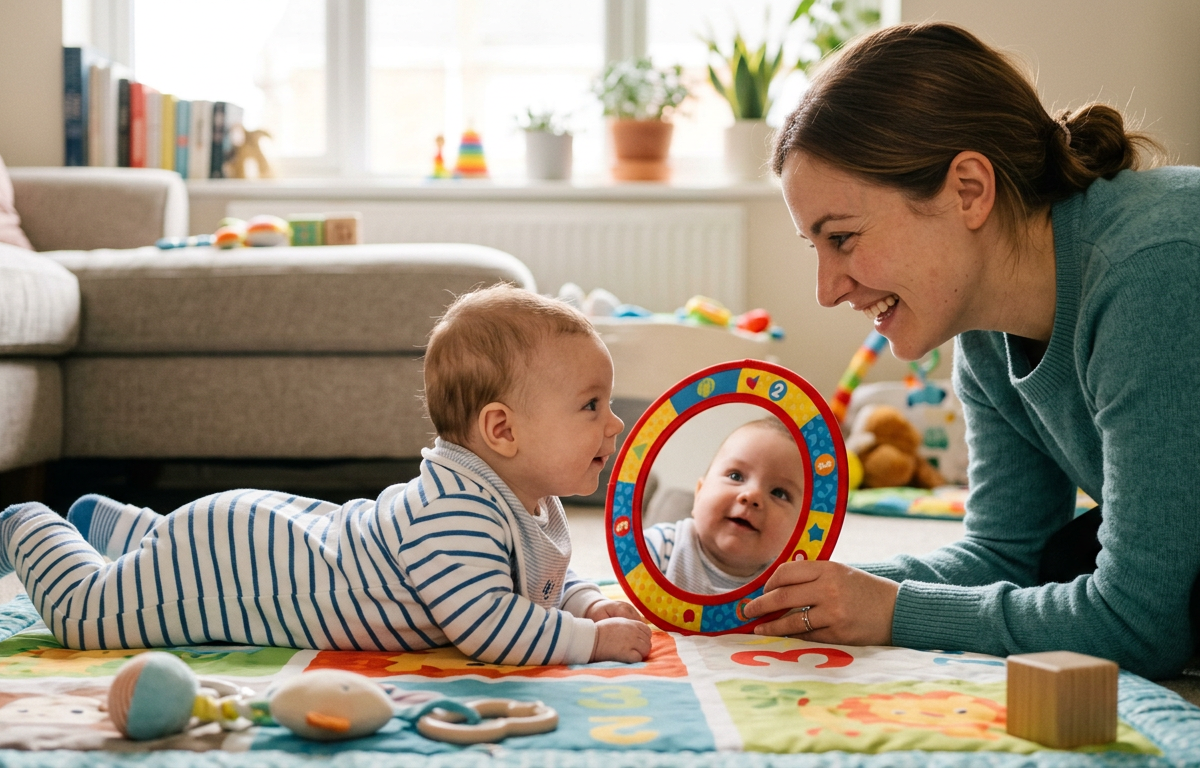
- HOW TO SET UP THE ACTIVITY: Lay your baby on their tummy on the firm play mat. Sit or lie down in front of them so your face is directly in their line of sight, about 8-12 inches away. Make eye contact and ensure they are comfortable and alert.
- STEP-BY-STEP CAREGIVER MOVE #1: Get down to your baby's eye level while they are on their tummy, ensuring eye contact. Smile broadly and say, "Hello, my sweet baby! Are you ready for some tummy time fun?" Use an enthusiastic, sing-song voice. This encourages them to lift their head and engage visually.
- CAREGIVER MOVE #2: As your baby lifts their head, gently introduce a baby-safe mirror directly in front of them, propped up or held securely, so they can see their own reflection and yours. Say, "Look! Who do you see? It's you, and it's me!" Point to their reflection and then to yours, allowing them to track the movement.
- CAREGIVER MOVE #3: Remove the mirror and hold a high-contrast card or soft toy about 8-10 inches in front of their face. Slowly move it side to side, encouraging their eyes to track the object. Continue to talk and make soft cooing sounds throughout, narrating, "Look at this! It's bright and interesting!"
- READ BABY'S CUES: Look for signs of engagement like sustained eye contact, smiling, cooing, and attempting to lift their head. If your baby turns their head away, fusses, arches their back, or becomes still and withdrawn, these are signs of overstimulation. Pause the activity, pick them up for a cuddle, or move to a quieter space.
- HOW TO WEAVE THIS INTO DAILY ROUTINES: Incorporate short bursts of tummy time during diaper changes, after naps, or before baths. Talk, sing, and make faces with your baby often, especially during feeding and while holding them, to continuously build those social connections and communication skills.
Example playthrough
"Caregiver Maria places 2-month-old Leo on his tummy on the play mat. She gets on the floor in front of him, smiling and saying, 'Good morning, sweet boy!' Leo pushes up slightly on his arms and smiles back. Maria then holds a baby-safe mirror, and Leo stares intently at his reflection, making soft cooing sounds. Maria continues to chat about what they see, enjoying the back-and-forth."
Variations
- ✨ Sibling involvement: Have an older sibling lie down near the baby's head during tummy time and make gentle, silly faces and sounds, supervised closely.
- ✨ Low-energy caregiver: Lie on your back and place the baby on your chest, face to face. Chat, smile, and make gentle movements with your head, letting baby practice head lifting against your body.
- ✨ Second caregiver bonding: One caregiver holds the baby in an upright burp position, supporting head and neck, while the second caregiver engages directly with talking, smiling, and simple movements in a mirror.
Learning benefits
- 💡 This activity fosters secure attachment through responsive 'serve-and-return' interactions. It supports gross motor development by strengthening neck and trunk muscles during supervised tummy time, and enhances early language and social-emotional skills through face-to-face communication, cooing, and eye contact.
Safety notes
- ⚠️ Always place baby on their back to sleep; tummy time is only for when baby is awake and supervised. • Ensure all materials are baby-safe, free of small parts, and shatterproof. • Never leave baby unattended on elevated surfaces. • No screens for entertainment under 18 months of age, except for live video chat. • Never allow baby to chew on anything not specifically designed for infant use.
Cleanup
- 🧹 Put materials away and ensure the play area is clear.
From the community (0)

Loved it? Let other families know
Everything is optional — leave a star, a tip, a photo, or all three.
Loading your feedback…