
Baby (0–12 months)Free — baby's first 3 months
Crib Comfort & Safety Check
Help parents create and maintain a safe, comforting sleep environment for their baby, focusing on AAP safe sleep guidelines.
Ready right now 15 min Ages 0–6 months 1–2 players Indoor
Caregiver educationEnvironmental safetyBonding (indirectly through secure sleep) Routine buildingRisk assessment

Materials
- Baby's crib or bassinet1
- Firm mattress with fitted sheet1
- Wearable blanket or sleep sack (optional)1
Setup
- 1Ensure the crib or bassinet is empty except for a firm mattress and fitted sheet. Remove any loose blankets, pillows, bumper pads, or soft toys. Have your baby fed, burped, and changed, ready for a calm observation or nap time.
Step-by-step instructions
- MILESTONES THIS AGE: Babies at this age typically start to lift their head briefly when on tummy, bring hands to mouth, focus on faces, prefer human voices, and calm down when picked up or spoken to. They can also briefly hold a rattle when placed in their hand and react to loud sounds. These milestones show developing awareness and early motor control.
- WHEN TO CALL YOUR PEDIATRICIAN: If your baby is not gaining weight, has persistent feeding difficulties, is unusually lethargic or irritable, has a fever (especially under 3 months), has difficulty breathing, or if you have any concerns about their development or well-being, please contact your pediatrician promptly.
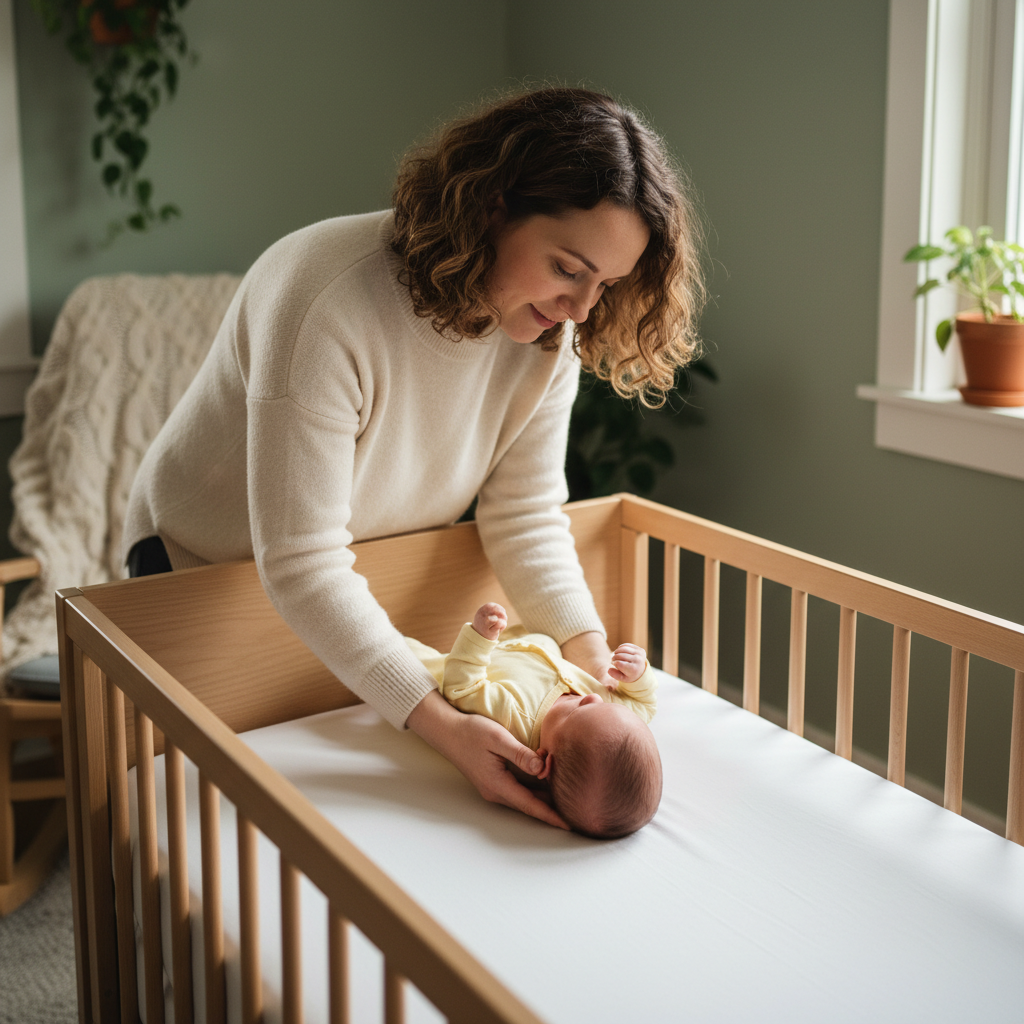
- HOW TO SET UP THE ACTIVITY: This activity is about observing and establishing safe routines around your baby's sleep space. Place your baby on their back in their empty crib. Take a moment to gently touch and inspect all parts of the crib, ensuring it is sturdy and clear of hazards.
- STEP-BY-STEP CAREGIVER MOVE #1: Gently lower your baby into their crib or bassinet, always placing them on their back. Talk to them softly, saying something like, "Time for a comfy rest, sweetie. You're so safe and sound in your bed." This gentle touch and soothing voice helps them connect the crib with security.
- STEP-BY-STEP CAREGIVER MOVE #2: With your baby safely on their back in the crib, take a flashlight and shine it into different corners and crevices of the crib. Look for any loose screws, cracked wood, or sharp edges. Also, check that the mattress fits snugly with no gaps larger than two fingers between the mattress and the crib sides. This thorough check ensures no hidden hazards.
- STEP-BY-STEP CAREGIVER MOVE #3: Stand back from the crib and observe the entire sleep environment. Is anything hanging nearby that could be pulled into the crib? Are there any cords within reach? Imagine the crib from your baby's perspective, checking again for any possible risks. This visual sweep helps catch overlooked dangers.
- READ THEIR CUES: Your baby might be calm, sleepy, or even a little fussy. If they are calm, they might look around or follow your movements. If fussy, they might turn their head away or squirm. Respond by rubbing their tummy gently, singing a quiet song, or picking them up and re-settling them once they are calm again. The goal is a peaceful crib experience, not immediate sleep.
- HOW TO WEAVE THIS INTO DAILY ROUTINES: Make this "Crib Comfort & Safety Check" a quick daily or weekly habit, perhaps during a diaper change or before a nap. Turn it into a quiet, comforting ritual that ensures their sleep space remains consistently safe and inviting. Consistency helps reinforce safety and creates a predictable routine for both of you.
Example playthrough
"Sarah gently placed her 3-month-old, Leo, on his back in his crib. She softly hummed a lullaby as she smoothed his wearable blanket. Then, she ran her hand along the crib rails, checking for any rough spots. She imagined Leo growing and becoming more active, mentally noting how to keep the space clear. Even though Leo was just looking around, Sarah felt confident she was providing the safest place for him to rest."
Variations
- ✨ Instead of just looking, gently wipe down the crib rails during your safety check, making it a quick cleaning routine too.
- ✨ If your baby is awake and content, you can narrate your safety checks to them like, "Mama is checking your cozy bed to make sure it's super safe for you!"
- ✨ Incorporate the safety check into a bedtime song or rhyme to make it a more playful and memorable part of the routine.
Learning benefits
- 💡 This activity reinforces the crucial importance of safe sleep practices, directly contributing to your baby's health and well-being. By routinely checking the crib, caregivers build confidence in providing a secure environment, which in turn fosters a sense of security and peaceful rest for the baby, and peace of mind for the parents.
Safety notes
- ⚠️ Always place baby Alone, on their Back, in a Crib. • Ensure the crib or bassinet is free of loose blankets, pillows, bumper pads, sleep positioners, and soft toys. • The mattress must be firm and fit snugly with a fitted sheet. • Never leave your baby unsupervised on elevated surfaces. • Watch for small parts on toys or crib components that could become choking hazards. • No screens for babies under 18 months, except for live video chat with family. • No honey for babies under 1 year old. • Always supervise infants during any awake time in the crib.
Cleanup
- 🧹 Ensure the crib remains clear of all items except for the baby and their fitted sheet on a firm mattress. Put away any cleaning supplies or tools used during the safety check.
From the community (0)
Loved it? Let other families know
Everything is optional — leave a star, a tip, a photo, or all three.
Loading your feedback…
