
Pip Playbook fox mascotPip Sign in

Try Pip Plus free for 7 days

$9.99/mo or $59.99/yr · planner, milestones & full library

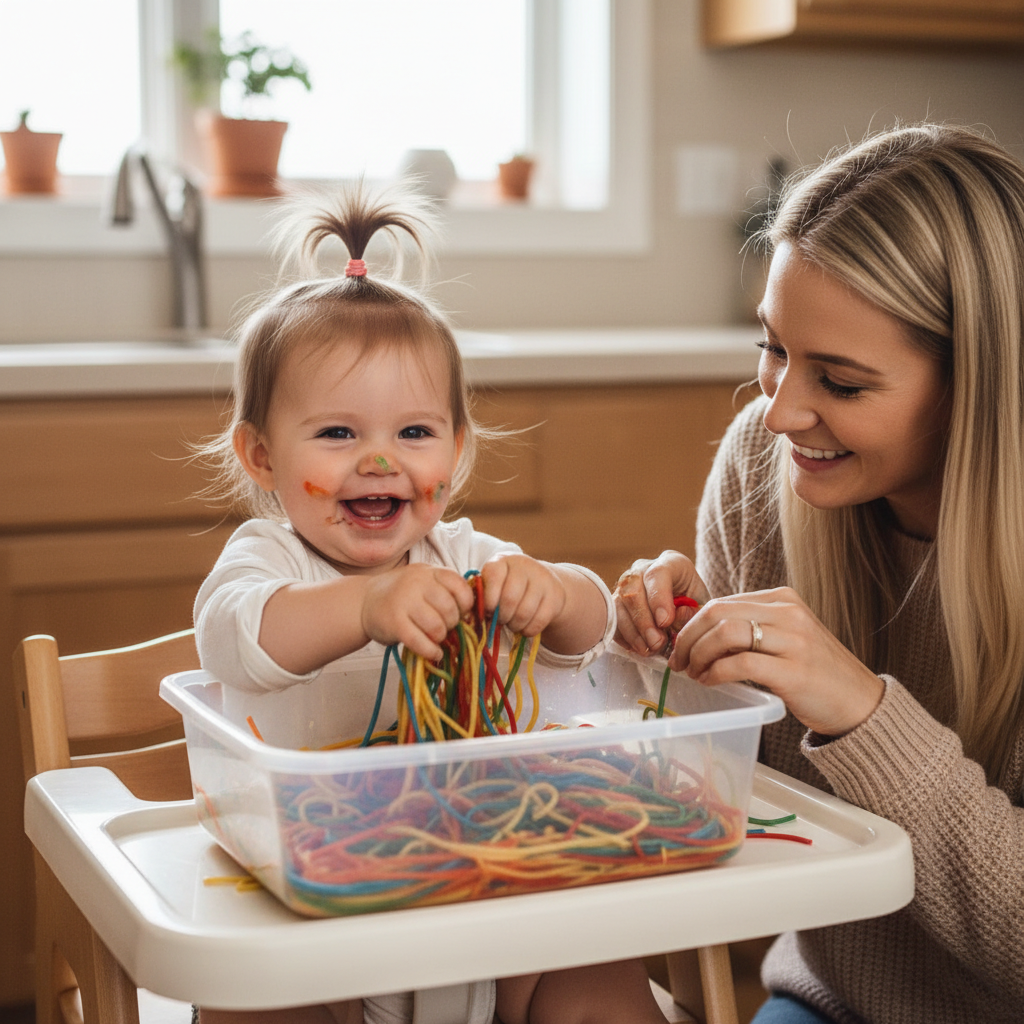
Cooked-Spaghetti Squish Bin — Toddler (12–36 months) activity for ages 12–18 months (indoor, 15 min)
Toddler (12–36 months)

Cooked-Spaghetti Squish Bin

Toddlers explore cooked spaghetti with their hands, squishing and squeezing to develop sensory awareness and fine motor skills.

Ready right now 15 min Ages 12–18 months 1 players Indoor
Sensory explorationFine motor skillsHand-eye coordinationCause and effect understandingLanguage development (descriptive words)

Unlock this activity

Sign in to use one of your 3 free weekly unlocks.

Learning benefits

  • 💡 This activity helps your toddler learn about different textures through touch, which is a key part of sensory development. Squishing and grasping the spaghetti also strengthens their hand muscles and improves their hand-eye coordination, paving the way for future skills like drawing and writing. Hearing you use descriptive words expands their language understanding. Milestones this age: Points to desired objects. Imitates gestures. Says “mama” and “dada” and a few other words. Uses a cup without a lid and eats with a spoon. Helps with dressing by pushing arm through sleeve or lifting foot. Begins to run and walk alone. • WHEN TO CALL YOUR PEDIATRICIAN: If your child is not crawling or walking. If they do not point to show things. If they don’t babble or try to say words. If they don’t make eye contact. • HOW TO SET UP THE ACTIVITY: Place your toddler in their high chair or on the floor in front of the bin of cooled spaghetti. Ensure they are comfortable and ready to explore. You might want to remove their shirt or use a bib to minimize mess. • STEP-BY-STEP CAREGIVER MOVE #1: Gently place your toddler's hands into the spaghetti. Encourage them to explore by squishing, pulling, and squeezing the noodles. Describe what they are doing and feeling: "Ooh, that's so squishy!" or "Look, long spaghetti!" • STEP-BY-STEP CAREGIVER MOVE #2: Model different ways to interact with the spaghetti. You can pick up a strand and let it dangle, or gather a handful and squeeze it. Narrate your actions: "I'm making a big spaghetti ball!" or "Can you wiggle your fingers in the noodles?" • STEP-BY-STEP CAREGIVER MOVE #3: Offer a small, unbreakable cup or scoop for your toddler to use with the spaghetti. They might enjoy transferring the noodles, or just stirring them around. Remember, the focus is on exploration, not perfection. • READ THEIR CUES: Watch for signs of enjoyment, like smiles, giggles, or focused attention. If your child pulls away or seems distressed, it might be time to stop. Respect their boundaries and try again another day. • HOW TO WEAVE THIS INTO DAILY ROUTINES: This activity can be a fun way to explore new textures before or after a meal. You can also talk about different food textures while you are preparing dinner, like "sticky rice" or "crunchy carrots."

Safety notes

  • ⚠️ Always supervise your toddler closely during this activity. Ensure the spaghetti is completely cooled to avoid burns. This activity is for sensory exploration, not for eating; ensure your toddler understands not to consume the play spaghetti. • Prepare food safely: cut small, round foods like grapes and hot dogs lengthwise to prevent choking. Avoid whole nuts, popcorn, and hard candies for toddlers. • Active supervision around even an inch of water is crucial. Never leave a child unattended near water. • Keep all materials non-toxic and age-appropriate. • Prioritize positive discipline; never use shame. • Rear-facing car seats are safest until at least age 2.

Cleanup

  • 🧹 Gather the spaghetti and any added toys. Wipe down the high chair and floor with a damp cloth. Dispose of the spaghetti in a compost bin or trash. A quick hand wash for your toddler, and cleanup is complete!

From the community (0)