
Health, sleep & safetyFor: Baby, Toddler, Preschooler, School-age 5 min
Little teeth: brushing, first dental visits and gentle routines
Caring for a first tooth and making brushing more manageable, one small step at a time.
The short version
Begin brushing when the first tooth appears, use the age-appropriate amount of fluoride toothpaste and keep adult help part of the routine.
Start here: the basics
What it is
This guide covers caring for your child's teeth from the very first tooth: how to brush, how much fluoride toothpaste to use, and when to plan the first dental visit.
Why it matters
Baby teeth hold space for adult teeth and help children chew and speak clearly. Tooth decay is one of the most common childhood health problems, and it is largely preventable with daily brushing, fluoride and early check-ups.
What's happening at this age
The AAP recommends brushing twice a day as soon as the first tooth appears, using a smear of fluoride toothpaste the size of a grain of rice under age 3 and a pea-sized amount from 3 to 6. A first dental visit is recommended by the first birthday or within six months of the first tooth. Children usually need help brushing until about age 7 or 8.
Words you might hear
- Fluoride:
- A mineral that strengthens tooth enamel and helps prevent cavities.
- Fluoride varnish:
- A quick protective coating a pediatrician or dentist can paint on the teeth.
Why small daily habits matter
If brushing has become a struggle, you are not the only family navigating it. It is a skill and a care routine, not a test of cooperation. Plaque contains bacteria that use sugars and produce acids that can damage teeth. Fluoride helps protect the tooth surface; regular brushing and dental care work together. Baby teeth matter for comfort, eating and speech, even though they will eventually fall out. A dentist can help you tailor care to your child rather than waiting until a tooth hurts.
From the first tooth onward
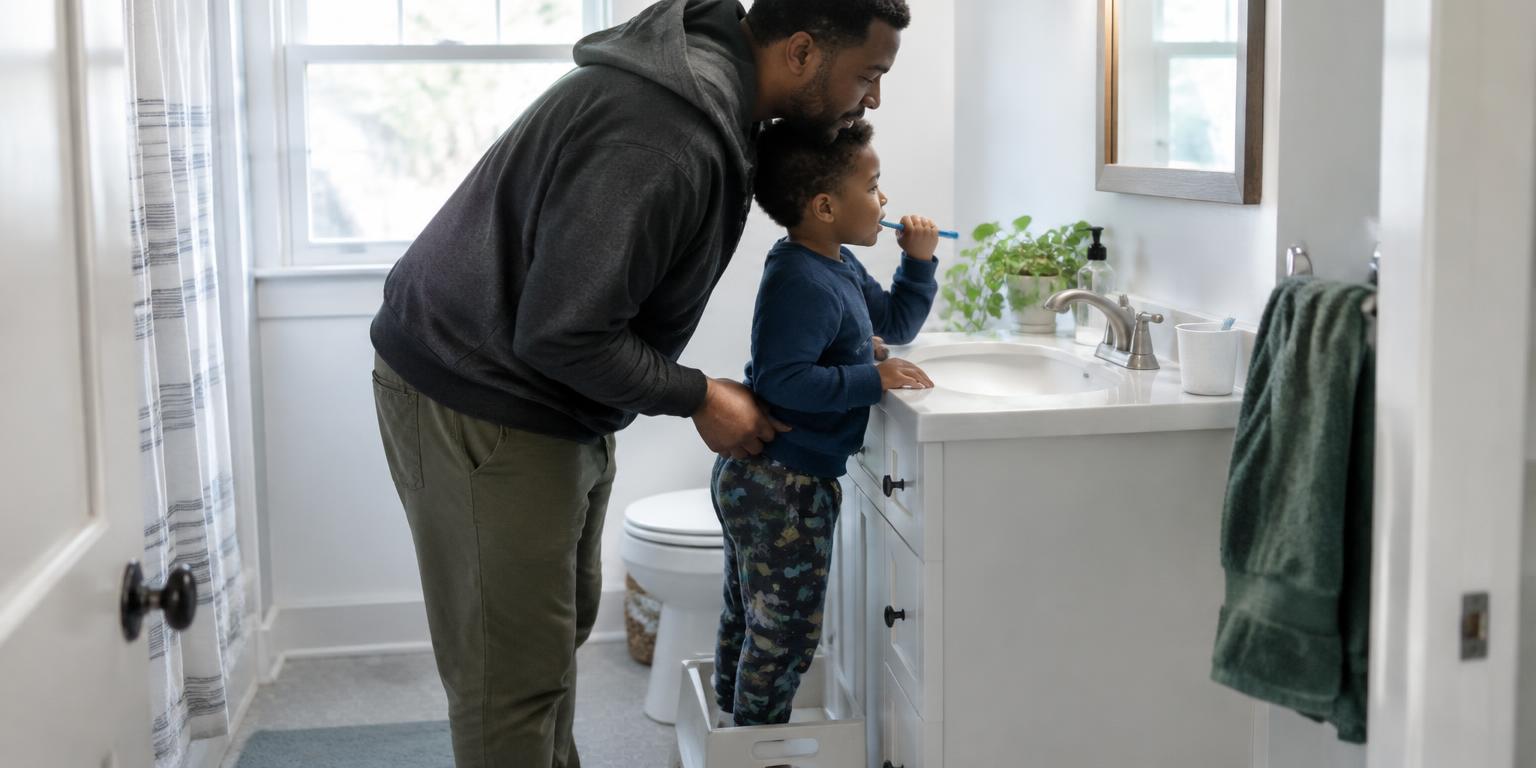
- Use a small, soft toothbrush and brush twice daily from the first tooth. Under age 3, use a smear of fluoride toothpaste about the size of a grain of rice; ages 3–6, use a pea-sized amount.
- An adult should dispense the toothpaste, help brush all surfaces and discourage swallowing it. Encourage spitting when your child can manage it; keep the tube out of reach.
- Arrange a first dental visit within 6 months of the first tooth, and no later than the first birthday. This can be a chance to ask questions, not just look for cavities.
- Keep helping older children until they can brush thoroughly and reliably. Ask the dentist to demonstrate the technique and when to begin flossing touching teeth.
- Avoid putting a baby to sleep with a bottle of milk, formula or juice. Frequent sugary drinks and snacks can increase cavity risk; discuss realistic food and drink routines with your care team.
Example play-through: ‘Only I can hold the brush!’
Your two-year-old grips the toothbrush at bedtime and turns away when you try to help clean the back teeth.
- Acknowledge independence: ‘You want your own turn.’ Prepare the age-appropriate fluoride amount—a rice-grain smear under age three; a pea-sized amount from three to six—and supervise use.
- Let them have a practice turn, then explain: ‘You brush first, and I help with the places at the back.’ Give a choice of a comfortable supported position or suitable brush, not a choice about whether teeth are cleaned.
- Help gently where you can see the teeth, keeping breathing unobstructed. A mirror or short song can help if your child likes it; do not force those extras or rush with harder scrubbing.
- If they say it hurts or the resistance is sudden, pause and check what changed. Say, ‘I hear that it hurts. We will ask the dentist for help with a comfortable plan.’
If it is still hard: If brushing remains distressing, ask the dentist about sensory adaptations and safe ways to help, rather than escalating a struggle. Arrange the first dental visit by the first birthday or within six months of the first tooth. Pain needs assessment, not a lecture.
Example: brushing suddenly hurts
If a child who usually tolerates brushing cries or points to one area, pause and ask what feels uncomfortable. A sore gum, cavity, injury or sensitivity may need attention. Avoid assuming resistance is misbehavior or scrubbing harder to finish quickly. Tell the dentist what changed and ask how to keep teeth clean comfortably while it is assessed. You can say, “I hear that it hurts. We will get help and find a gentler way.” Pain is a reason to investigate, not a reason for a lecture.
Making room for sensory and developmental needs
Some children find the taste, sound or sensation difficult. Try a softer brush, a predictable sequence or a dentist-recommended toothpaste your child tolerates. Practice touching the brush to a hand first if that is welcome, without replacing tooth cleaning indefinitely. Let the dental team know about communication needs, disability, previous distress or difficulty opening the mouth. Ask about a gradual familiarization visit or accessible care. Do not force the mouth open, threaten the child or use unsafe restraint; persistent difficulty deserves an individualized plan.
Preparing for a first visit
Describe the visit simply: “The dentist will count your teeth and help us keep them healthy. I will be there to support you.” Avoid promises that nothing could feel uncomfortable; instead ask the team to explain before each step. Bring questions about fluoride, feeding at night, thumb sucking, tooth injuries or brushing technique. A favorite book or comfort item may help if the clinic permits it. Your child does not need to perform perfect bravery to receive good care.
One small step for today
Check the toothpaste amount and choose a repeatable morning and bedtime moment. If a dental visit is overdue, make the appointment without blaming yourself. Ask one other caregiver to follow the same plan. A routine can become easier with practice, and you are allowed to ask for help before it does.
