
Health, sleep & safetyFor: Baby, Toddler, Preschooler, School-age 5 min
Water safety: layers of protection for family play
Enjoy water together with clear supervision, safer surroundings and realistic expectations about swimming lessons.
The short version
Water needs an attentive adult and several layers of protection. Swimming lessons, float toys and an older sibling never replace supervision.
Start here: the basics
What it is
Water safety means using several layers of protection — close, focused supervision, barriers like pool fences, life jackets, swimming skills and knowing CPR — whenever children are around water.
Why it matters
Drowning is a leading cause of death for young children, and it can happen quickly and silently, even in shallow water like bathtubs, buckets and kiddie pools. No single layer is enough on its own, but together they greatly reduce risk while still letting children enjoy water play.
What's happening at this age
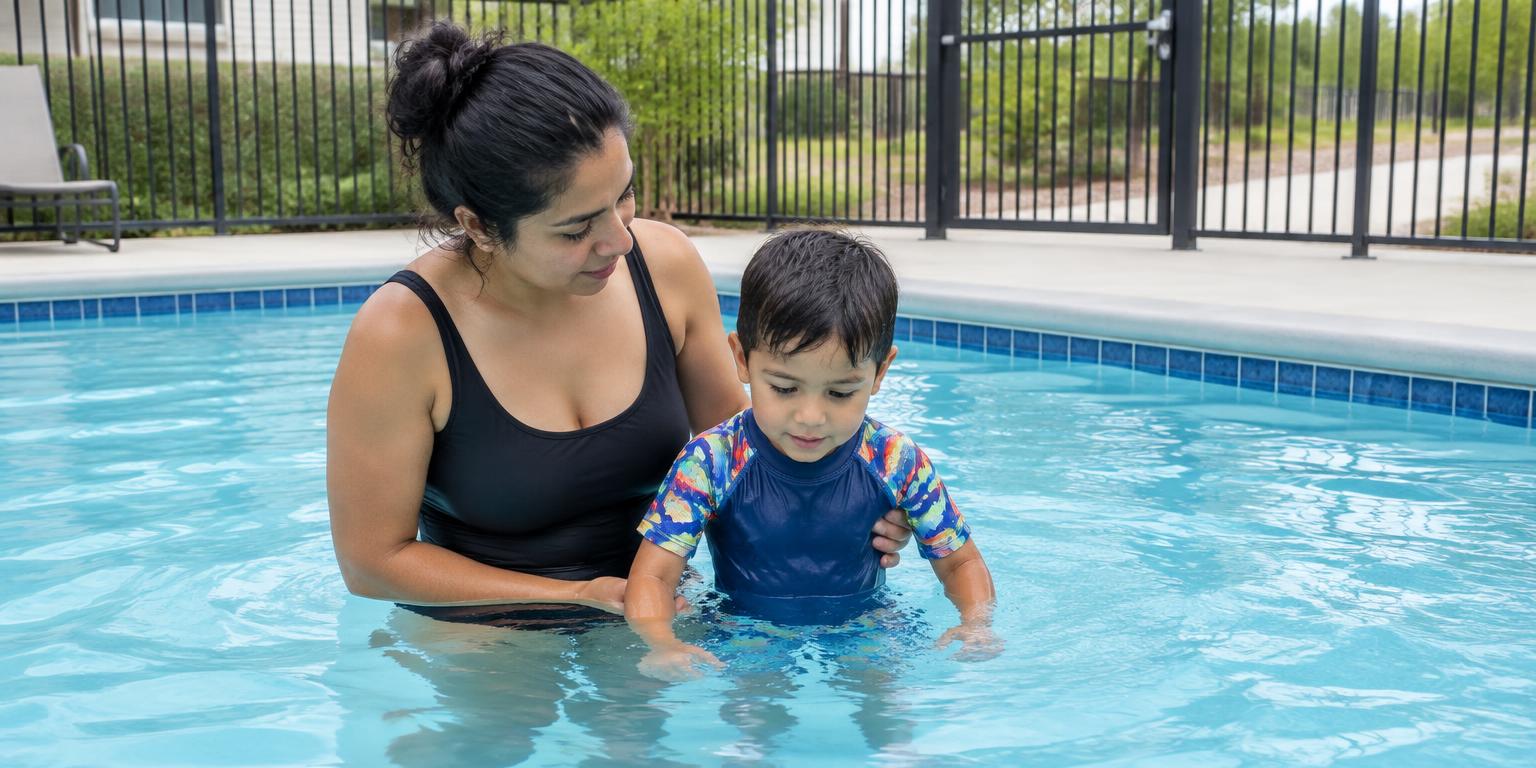
Children ages 1 to 4 are at the highest risk. The AAP supports swim lessons for many children from age 1, depending on readiness, but lessons never make a child 'drown-proof'. Toddlers and young swimmers need an adult within arm's reach — called touch supervision.
Words you might hear
- Touch supervision:
- An adult close enough to reach and touch the child at all times.
- Water watcher:
- A named adult who watches the water with no phone or distractions, then hands off clearly to another adult.
Why several layers matter
Water can be a joyful part of family life, and preparation can make the day feel more manageable. Drowning can happen quickly and quietly; a child may not shout or splash for help. A pool is not the only risk: baths, buckets, garden containers and natural water matter too. The AAP describes layers of prevention because no single measure is enough. Barriers reduce access, close supervision protects during use, and training helps adults respond. These are adult responsibilities, not rules a small child must remember perfectly.
During water time
- Stay within arm's reach of infants, toddlers and weak swimmers, providing touch supervision. Watch older swimmers closely too, with supervision suited to the setting and their abilities.
- Name a capable adult water watcher and make every handover explicit. Put phones away and avoid reading, alcohol or other distractions. “Everyone is watching” can mean nobody is responsible.
- Use a properly fitted US Coast Guard-approved life jacket where appropriate, especially boating and open water. Inflatable arm bands and float toys are not safety devices; a life jacket does not remove the need for supervision.
- Learn CPR and safe rescue through a qualified course. Know how to call emergency services and keep rescue equipment accessible. Do not enter dangerous water if you cannot rescue safely.
- Check local conditions, depth and rules. Stay in designated areas and heed lifeguards; their presence does not replace a caregiver's attention.
When nobody is swimming
A home pool needs a four-sided isolation fence separating it from the house and yard, with a self-closing, self-latching gate; follow local standards and keep the gate secure. Door alarms and pool covers can add protection but are not substitutes for an effective barrier. Empty buckets and small pools promptly and store them so they cannot refill. Keep bathrooms and water containers inaccessible to young children. At someone else's home, check access before relaxing into conversation. A child can wander toward water outside the planned swimming time.
Example play-through: you need a towel during water play
You are within arm's reach of your two-year-old at a paddling pool. The towel is indoors. Another adult is nearby looking at their phone.
- Stay with your child. Do not assume a nearby adult has taken over or leave for a quick errand; young children need close, undistracted supervision.
- Ask directly: ‘Will you take over watching Maya in the water now, within arm's reach and without your phone?’ Wait for a clear answer.
- Confirm the capable adult has put the phone away and is in position before you move. If they cannot take over fully, bring your child out of the water with you instead.
- On return, make the handover explicit again: ‘I am watching Maya now.’ After play, empty and secure the pool so it cannot become an unsupervised water hazard.
If it is still hard: If there is no capable adult available, choose dry play until you can supervise. A sibling, swimming lessons or floaties do not replace adult supervision. Missing children should be checked for in water immediately; emergencies require emergency services and appropriate rescue/CPR support.
Example: your child has finished swimming lessons
Celebrate what they practiced without saying they are drown-proof. Lessons may reduce risk for some children but do not make independent access safe. Readiness varies; the AAP supports considering lessons from around age 1 based on the individual child. Infant water classes are not proven to prevent drowning in babies under 1. Ask the program about qualified instructors, supervision, emergency readiness and adapted instruction. You can say, “You are learning water skills, and a grown-up still stays with you.” Never push a frightened child underwater or turn breath holding into a contest.
Natural water is a different setting
A confident pool swimmer may not be prepared for currents, sudden drop-offs, cold water or waves. Choose designated areas, use appropriate life jackets and follow local warnings. Teach a simple boundary such as waiting with a caregiver before approaching the edge, but keep adult oversight and barriers where possible. If a toy drifts away, leave it rather than encouraging a child to chase it. Plan around the least confident swimmer and the conditions, not the most enthusiastic person's wishes.
One family check today
Look for one unnoticed water source at home and make it inaccessible or empty it. Before the next outing, agree who watches, how you hand over and what to do in an emergency. Dry-land picture stories can help children understand the plan, but no game or app teaches lifesaving swimming or rescue skills.