Skills to teachFor: Toddler, Preschooler, School-age 4 min
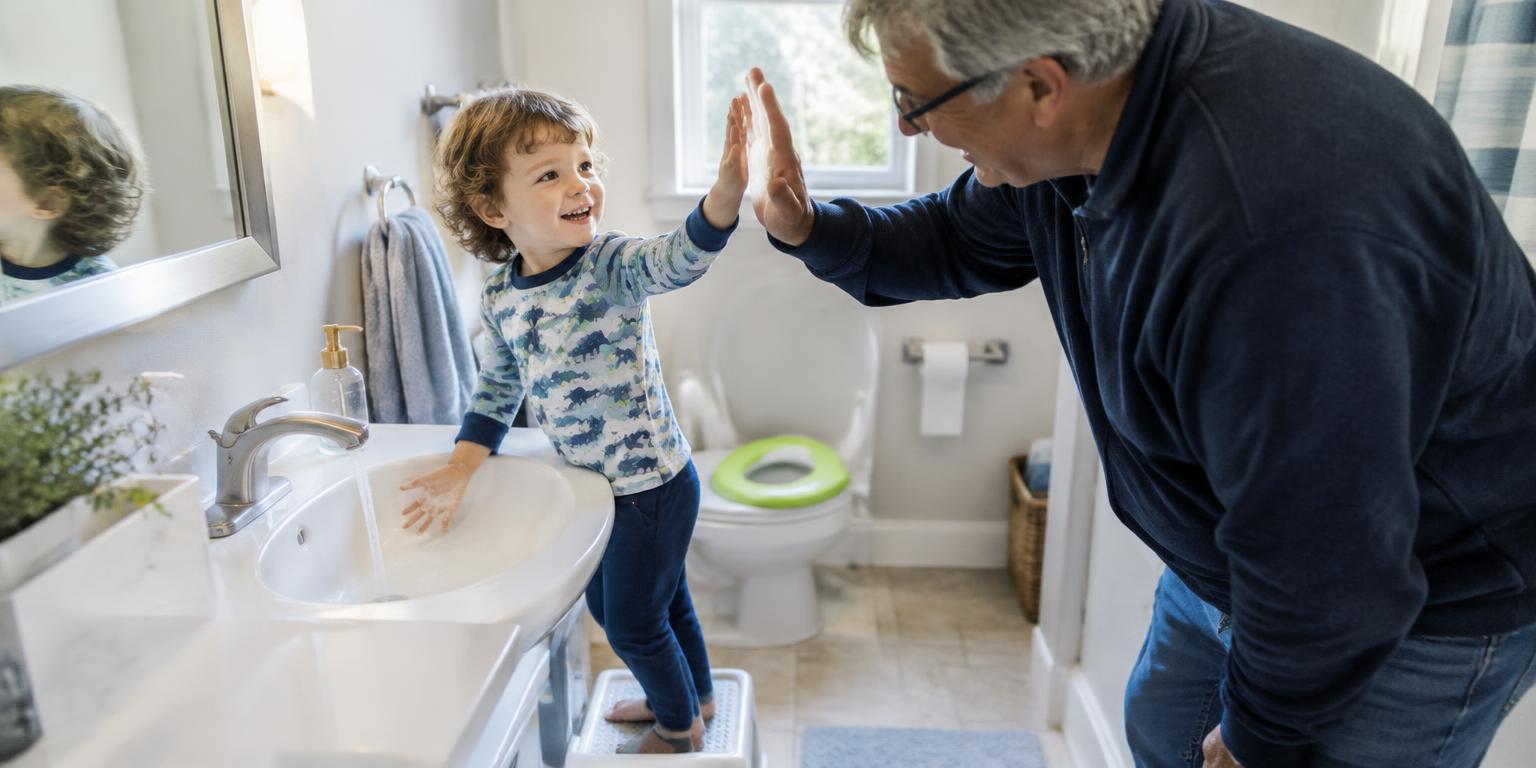
Little helper jobs, dressing and hands-on skills
Break everyday tasks into achievable steps, with time and safe support.
The short version
Give a real role that fits this child’s abilities; help is part of learning.
Start here: the basics
What it is
This guide is about letting children help with real household tasks and learn self-care skills like dressing, washing hands and tidying up.
Why it matters
Helping and self-care build confidence, fine and gross motor skills, responsibility and a sense of belonging. Children feel proud when they contribute, even if the result is not perfect.
What's happening at this age
Toddlers can help with simple tasks like putting toys in a basket; preschoolers can help set the table or dress with some help; school-age children can manage more steps independently. Patience and breaking tasks into small steps make a big difference.
Words you might hear
- Scaffolding:
- Giving just enough help for a child to succeed, then stepping back as they learn.
What is happening — and what the evidence says
It is okay if helping takes longer or dressing needs another attempt. Doing one small part together is still worthwhile. Everyday tasks offer practice with movement, planning and responsibility. AAP guidance recommends age-appropriate chores and encouragement for effort, while preschool guidance describes gradually developing dressing skills. Timing varies and some children need ongoing adaptations. A household task is not therapy or a milestone test. Children should not carry adult responsibilities or have to earn affection by helping.
What to try
- Toddlers can put a toy in a bin or a cloth in a basket with you. Give one direction and model it first.
- Preschoolers may set napkins or spoons, sort socks or water a plant with supervision. Keep knives, hot surfaces, chemicals, heavy objects and small choking hazards out of reach.
- For dressing, start with loose clothes and one step: push an arm through, pull pants up or open a fastening. Sit securely and give extra time.
- Use play for hand skills and movement: draw with suitable crayons or navigate a safe obstacle path. Offer supported alternatives; do not insist on a particular grip or performance.
- Older children can take more steps with a checklist and an adult check. Notice what they did rather than demanding perfection.
Words you can use
“You put the socks in the basket; that helped.” “I will start the zip, then you can pull it.” “Let us find a way that works for your hands.”
A small practice for today
Choose one task your child wants to try. Do the difficult part together and let them finish a manageable step. Repeated small opportunities are more useful than a long frustrating drill.
Example play-through: learning to zip a jacket
Your four-year-old wants to zip their jacket but cannot connect the two ends. They tug harder and say, ‘It does not work!’ You are getting ready for a walk.
- Help them sit securely so balancing is not another task. Say, ‘The start of the zip is tricky. I can help with that part.’
- Connect the ends while showing just that movement. Avoid explaining every dressing step at once or taking over the whole task.
- Offer the achievable part: ‘You can pull the tab upward. I will hold the bottom steady.’ Give them time and adapt the fastening if gripping is difficult.
- Describe the contribution: ‘You pulled the zip up while I held it.’ If it catches, stop pulling, reset gently and help more; needing assistance is not failure.
If it is still hard: On a rushed day, finish together and practice later. Pain, loss of skills or persistent self-care difficulty needs discussion with the child's clinician; a dressing game is not a substitute for assessment or recommended support.
Example: a toddler’s help makes more work
Give a real but manageable job such as carrying one cloth to a nearby basket while you do the rest. A preschooler can sort socks without being responsible for finishing the entire wash. Thank them specifically and clean up mistakes together: “The water spilled; let us get a towel.” Skip tasks involving heat, cleaning products, sharp tools or heavy objects. Helping should build participation, not transfer adult household stress to children or make a younger child the older sibling’s responsibility.
Adapt the tools, not the child’s worth
Larger handles, reachable storage, seated tasks, visual cues or fewer steps can make an activity more accessible. Offer drawing and movement in a way that fits the child rather than insisting on a uniform grip, hopping ability or speed. If motor or self-care difficulties limit daily life, ask what professional support would help. A small task can be meaningful without being therapeutic; do not advertise crafts or chores as a treatment for developmental differences.
Try it with play
Plan these with Pip Plus
Conversation & Connection
Helper Hero Thank-You Parade

Holidays & Seasons
Friendly Monster Table Helper

Holidays & Seasons
Candy Sorting Detectives

Holidays & Seasons
Friendly Ghost Shape Sort

Play Together
Couch Cushion Obstacle Course

Life Skills