
Health, sleep & safetyFor: Toddler, Preschooler 4 min
Picky eating: low-pressure ways to widen your child's plate
Why picky eating peaks around age 2, and how to help without mealtime battles.
The short version
You decide what, when and where food is served. Your child decides whether and how much to eat.
Start here: the basics
What it is
Picky eating means a child accepts only a small range of foods, refuses new ones, or eats very differently from day to day. For most young children, it is a normal phase rather than a problem.
Why it matters
Mealtimes can quickly turn into a battle, which often makes children even more cautious. Understanding why children are wary of new foods helps you keep meals calmer, protect their relationship with food, and slowly widen what they enjoy.
What's happening at this age
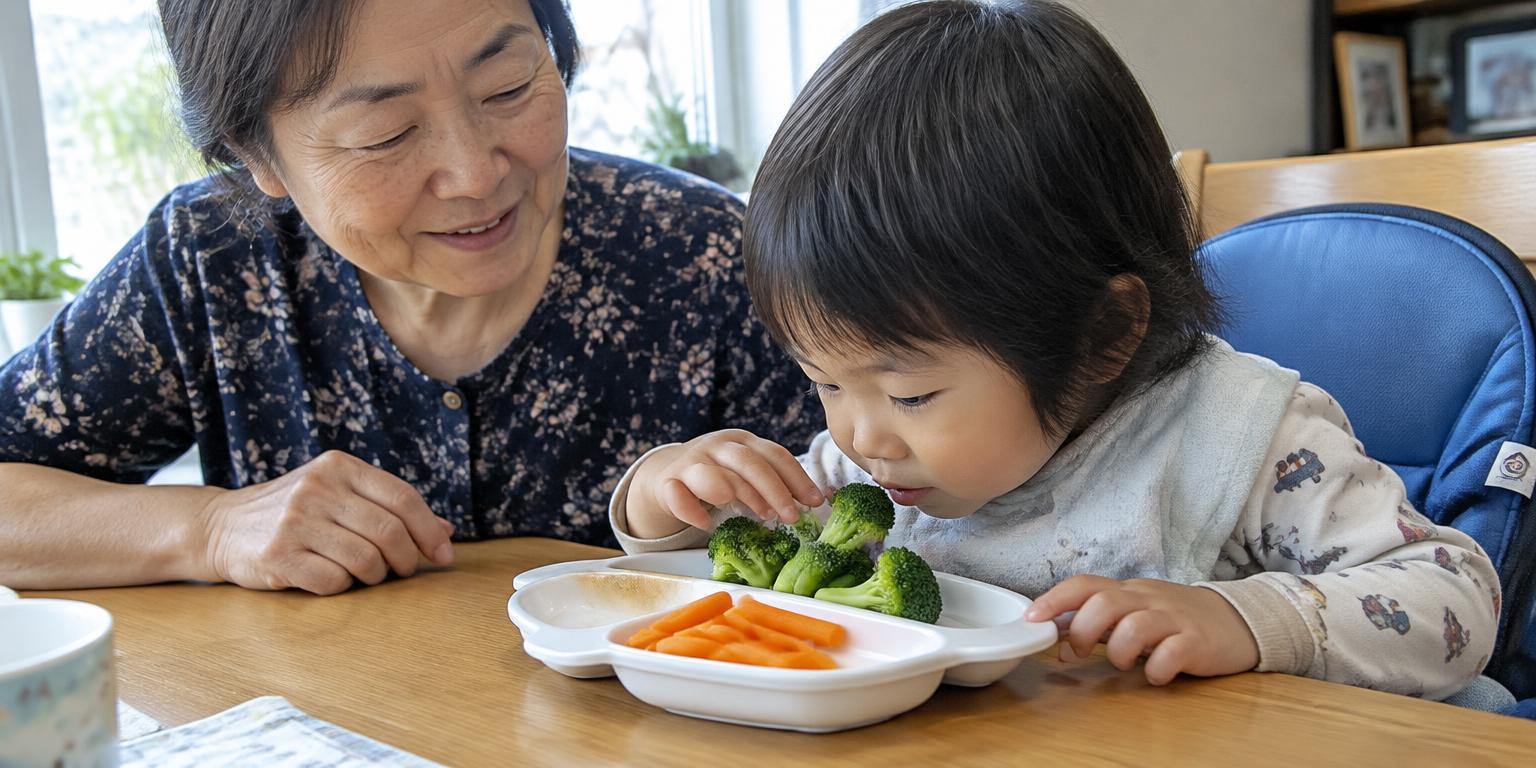
Toddlers' growth slows after the first year, so appetite naturally dips. Many children become wary of new foods between about ages 2 and 6 — this is sometimes called food neophobia. Children often need to see, touch and taste a new food many times (sometimes 10–15 or more) before accepting it.
Words you might hear
- Division of responsibility:
- A common approach: the adult decides what, when and where food is offered; the child decides whether and how much to eat.
- Food neophobia:
- A normal wariness of unfamiliar foods in early childhood.
Why it happens
Mealtime worries can feel personal when you have put care into preparing food. A rejected food is not a rejection of you, and small, low-pressure steps are a reasonable place to begin. Growth and appetite patterns change after infancy, and many toddlers become cautious about unfamiliar foods. Low-pressure repeated opportunities can help with familiarity, but there is no fixed number of tastes a child must complete. Some eating difficulties need individualized assessment rather than more exposure.
What helps
- Serve one 'safe' food your child likes alongside new foods.
- Offer small portions and let them ask for more.
- Eat together and eat the same foods when you can.
- Let kids touch, smell, wash and help prepare food.
- Skip bribes, rewards and 'one more bite' pressure.
- Keep meals and snacks on a predictable schedule; limit juice and milk between meals.
Example play-through: a new food stays untouched
At dinner, your three-year-old sees broccoli beside familiar rice and says, ‘Yuck! Take it away.’ You are worried they have eaten too few vegetables lately.
- Keep the meal calm: ‘You do not have to eat the broccoli. There is rice here too.’ Offer at least one familiar suitable food alongside the family meal when possible.
- If the broccoli touching the rice is distressing, offer a separate small plate. This makes the meal more accessible without demanding a taste first.
- Model eating normally and talk about something other than how much they eat. Avoid ‘One bite for dessert,’ bargaining, forced tasting or praise that turns eating into a performance.
- At a later meal, offer a small amount again without announcing a challenge. Your child may look, smell or ignore it; exploration is optional, not a step they must complete before leaving the table.
If it is still hard: Acceptance may take time and is not guaranteed by repeated exposure. A shrinking food range, pain, choking concerns or growth concerns needs clinical support; do not assume all restriction is ordinary picky eating. Follow any allergy or feeding plan.
Example: only the familiar food gets eaten
Stay neutral about what was selected and offer enough appropriate food within the meal. Do not use dessert as a prize for vegetables or demand “just one bite” to earn approval. If your child remains hungry, offer more of what is available according to your family’s routine rather than turning dinner into an endless menu of replacements. Responsive feeding may need individualized advice when growth, allergies, swallowing or restricted intake are concerns; a broad division-of-responsibility slogan is not a medical plan.
Look beyond the label “picky”
Sensitivity to texture, pain, constipation or difficulty chewing can affect eating. Notice patterns and bring examples to the clinician when intake is restricted or distressing. There is no magic number of exposures or foods that separates ordinary caution from a feeding problem. Do not make unsafe textures a sensory-play challenge or encourage a child to tolerate gagging for the sake of variety. Adapt preparation to chewing skills and seek professional support when needed.
Try it with play
Plan these with Pip Plus
Cooking & Baking
No-Bake 'Stained Glass' Gelatin Sandwiches

Cooking & Baking
Galaxy Swirl No-Bake Energy Bites

Cooking & Baking
Classic Chocolate Chip Cookies

Cooking & Baking
Fruit and Gelatin Cups

Cooking & Baking
Making and Coloring Cookie Dough Shapes

Cooking & Baking