
Skills to teachFor: Toddler, Preschooler 3 min
Potty learning: readiness, setbacks and patience
Signs your child is ready, a gentle approach, and handling accidents.
The short version
Follow your child's readiness, with patience, comfortable support and room for setbacks.
Start here: the basics
What it is
Potty learning (also called toilet training) is the gradual process of helping your child notice when they need to pee or poop and use the potty or toilet instead of a diaper.
Why it matters
Potty learning is a big step in independence and body awareness. Going at your child's pace — rather than a set age — usually means fewer power struggles, fewer setbacks and a more confident child.
What's happening at this age
Many children show readiness between about 18 months and 3 years, and many are fully trained during the day somewhere between 2 and 4. Nighttime dryness often comes later. Accidents and regressions are a normal part of learning, especially during stress or big life changes.
Words you might hear
- Readiness signs:
- Staying dry for longer stretches, noticing a wet diaper, showing interest in the toilet, and following simple directions.
- Regression:
- A temporary step backward, often after a change like a new sibling or move.
Readiness signs
Many children show readiness between 18 months and 3 years, and timing varies. You can watch for several signs together rather than choosing a deadline.
- Stays dry for about 2 hours or after naps.
- Tells you (or shows you) when they're wet or need to go.
- Can pull pants up and down and follow simple directions.
- Shows interest in the toilet or underwear. Curiosity can be a gentle opening, without pressure to start before they are ready.
What helps
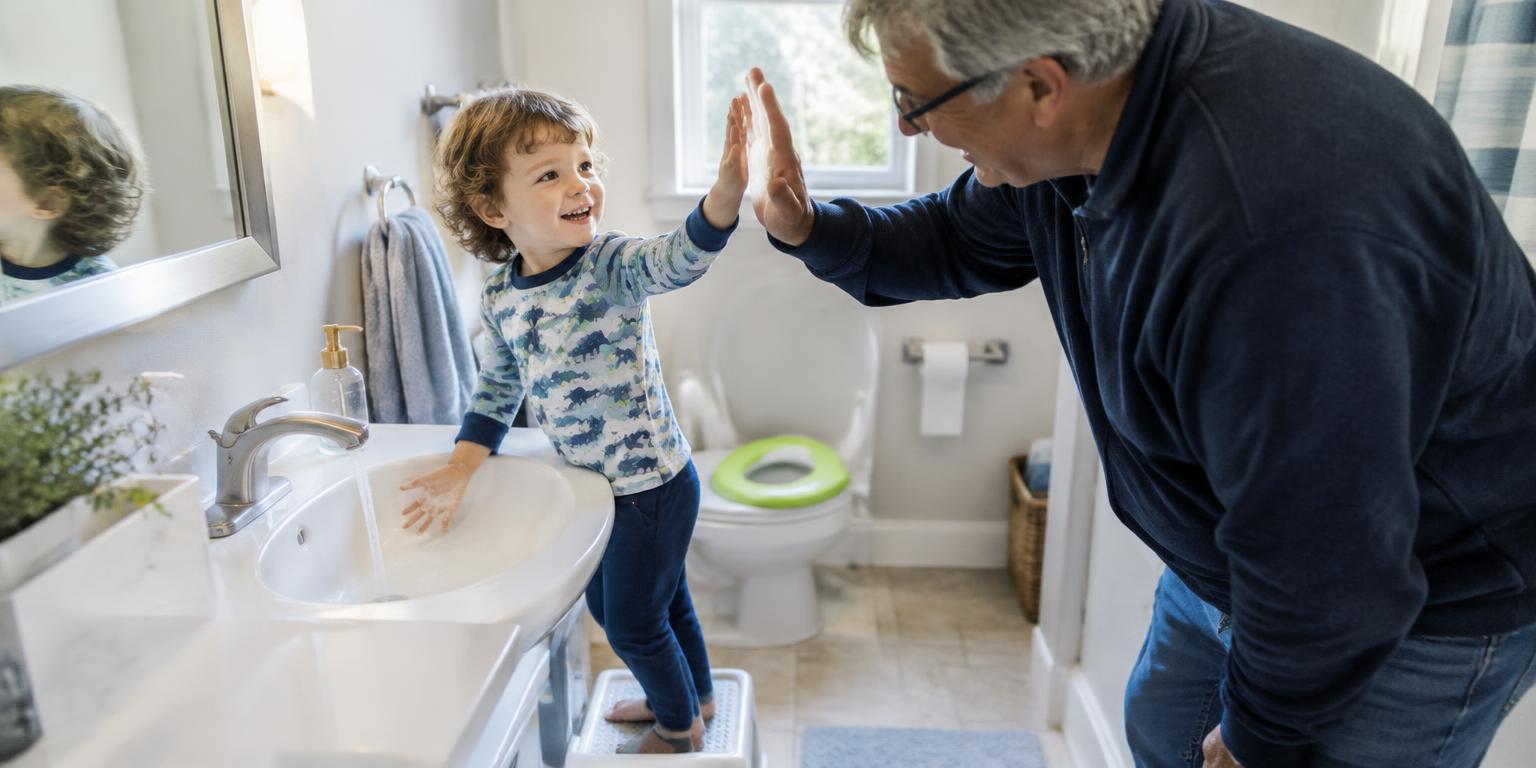
- Use a small potty or seat with a step stool so feet are supported.
- Offer regular potty sits after waking and meals.
- Praise trying, not just success. Skip punishments for accidents.
- Expect setbacks during big changes like a move or new sibling.
Example play-through: an accident during play
Your three-year-old, who has shown several readiness signs, wets their clothes while building. They look at you and say, ‘I did a bad thing.’
- Reassure without making a fuss: ‘You are not bad. Your clothes are wet, and we will help you get comfortable.’ Keep the moment private and matter-of-fact.
- Help with changing and cleaning. Offer one small role if they want it, such as putting wet clothes in the basket; cleanup is care, not punishment.
- Offer the potty without demanding a result: ‘Would you like to try before we go back to the blocks?’ Use a comfortable seat with supported feet and let the attempt stay brief and unpressured.
- Return to play and keep the next invitation predictable. Notice trying or communicating rather than attaching your approval only to a dry day.
If it is still hard: If they resist, do not force sitting or shame accidents. Pain, constipation or repeated accidents after established training needs medical advice; a pause in learning may help if pressure is building, with clinician guidance when needed.
Example: accidents after an easier period
Respond matter-of-factly: “Your clothes are wet. Let us get comfortable.” Help with cleanup without humiliation or making it a penalty. Notice constipation, pain, illness or changes in routine; ask the clinician about new or frequent accidents rather than assuming deliberate behavior or stress. Daytime and nighttime control can develop differently, so dry days do not mean a child must stay dry asleep. Do not shame a child for protective underwear or support they still need.
Keep confidence separate from performance
Notice communicating, trying or following a step rather than attaching worth to a dry day. Practice clothing and handwashing away from urgency, and keep expectations consistent across caregivers. A picture routine may help children who need visual support. Toileting is a bodily function, not a measure of maturity or parental commitment. Do not use this guide to diagnose constipation or prescribe treatments; pain, withholding or ongoing difficulties deserve individualized advice.
Try it with play
Plan these with Pip Plus
Life Skills
Glitter-Germ Handwashing Lesson

Life Skills
Morning Bed-Making Routine

Toddler (12–36 months)
Getting Dressed, Undressed!

Toddler (12–36 months)
Potty Time Stories: A Gentle Introduction

Toddler (12–36 months)
Sing-Along Hand Wash

Parent Care