
Skills to teachFor: Toddler, Preschooler, School-age 5 min
Praise effort, strategies and progress — without pressure
Help with mistakes, perfectionism and losing by noticing what your child actually does.
The short version
Notice a real effort or useful strategy with warmth; offer help or a break for the next step.
Start here: the basics
What it is
This guide explains how the way we encourage children — praising effort, strategies and progress rather than only results or 'being smart' — can help them keep trying when something is hard.
Why it matters
Children who see effort as part of learning are often more willing to try challenges and recover from mistakes. Specific, warm encouragement helps them notice what they did that worked, which builds lasting confidence.
What's happening at this age
Preschool and school-age children become more aware of how they compare to others and can feel discouraged easily. This is a great time to model persistence, celebrate small steps and talk about mistakes as part of learning.
Words you might hear
- Process praise:
- Praise for effort, strategy or persistence — for example, 'You kept trying different ways.'
- Growth mindset:
- The idea that abilities can grow with effort and practice. Research on it is mixed, so use it as encouragement rather than a guarantee.
What is happening — and what the evidence says
You can encourage your child without finding the perfect phrase every time. A genuine moment of noticing can be enough to begin. CDC parenting guidance recommends specific praise so children know what behavior you noticed. The AAP recommends praising effort rather than outcomes in age-appropriate responsibilities. Feedback about trying a strategy, practicing or asking for help can make the learning process visible. This does not mean all “you are smart” comments are harmful, or that praise guarantees resilience or achievement. Trying harder is not always the answer: a task may need instruction, a smaller step, an accommodation or a rest.
What to try
- Describe what happened: “You turned the piece and checked the corners,” rather than evaluating the whole child. Praise truthfully, not constantly.
- Acknowledge disappointment first. “You wanted it to work.” Avoid “It is easy” or “Just try harder” when your child is struggling.
- Offer one manageable next step or ask if they want help. Model a mistake and how you adjust; taking a break is also a strategy.
- Do not compare siblings or reward only winning. In games, model following rules, celebrating others and coping with a loss.
- Let enjoyable practice stay enjoyable. Praise is not a demand that your child perform, persist indefinitely or hide frustration.
Words you can use
“That was frustrating. You tried a different way and asked for help. Shall we do one part together or take a break?” After a loss: “You hoped to win. We can feel disappointed and still be kind to the other players.”
A small practice for today
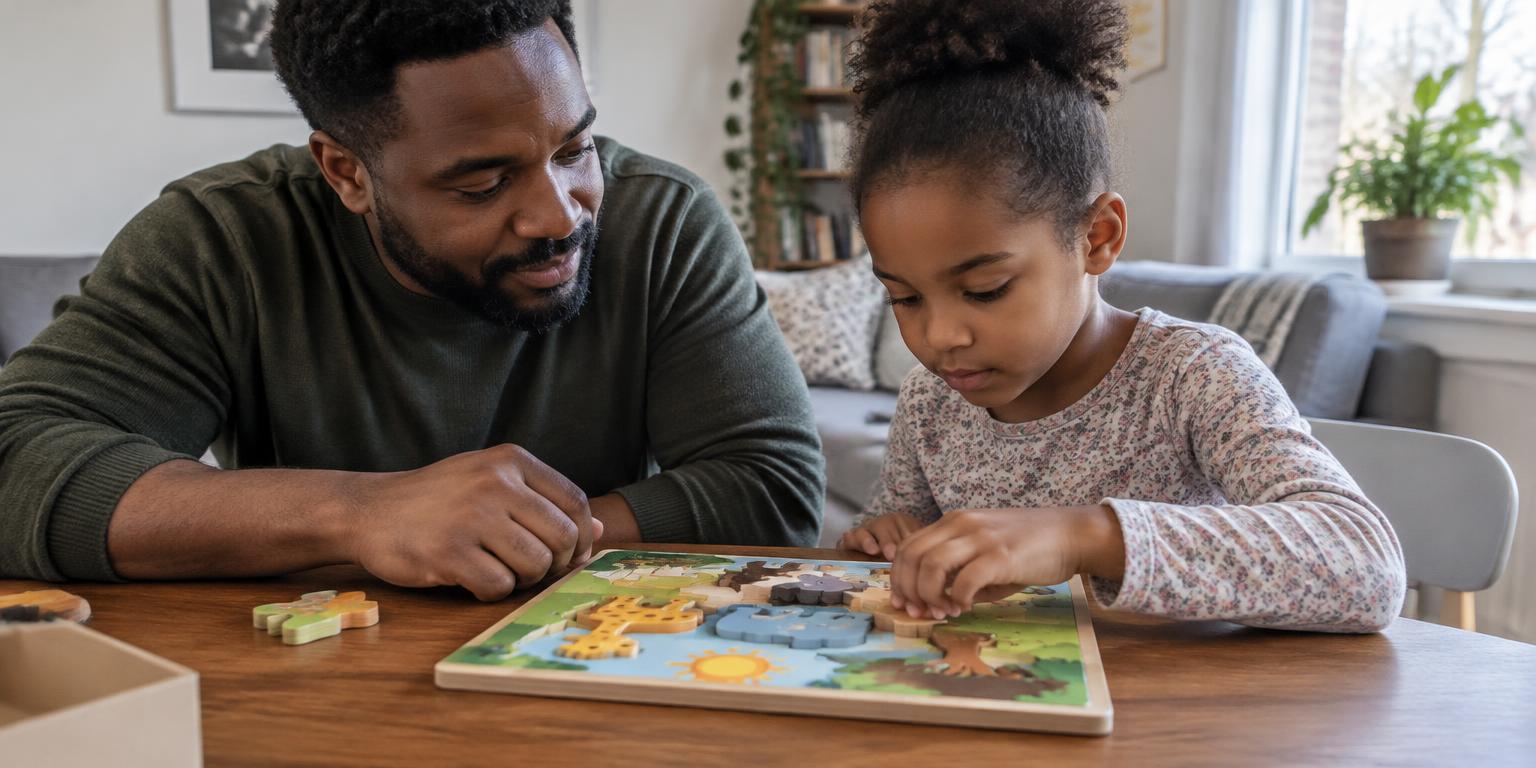
Choose a puzzle or short game that is neither trivial nor overwhelming. Name one real strategy you see. If your child is stuck, demonstrate one step and return control. It is okay to finish while there is still energy left, even if the puzzle is unfinished.
Example play-through: a puzzle feels impossible
Five-year-old Eli tries to fit a puzzle piece, pushes it twice and says, ‘I am stupid. I cannot do it.’ He starts to sweep the pieces off the table.
- Protect the pieces and people without criticizing him: ‘I will keep the pieces on the table. You wanted that piece to fit, and it is frustrating.’
- Offer support rather than instant praise: ‘Would you like a hint, help with one piece, or a break?’ Wait for his response. Rest is a useful option, not giving up.
- If he wants a hint, point to one feature: ‘This edge is straight. Let us look along the outside.’ Demonstrate once if needed, then let him choose the next move.
- When you see a real strategy, describe it: ‘You turned the piece and checked the edge.’ Finish with warmth whether it fits or not: ‘I liked working with you. We can leave the rest for another time.’
If it is still hard: If the puzzle stays too hard, choose fewer pieces or a clearer picture rather than urging more effort. Persistent self-critical talk or fear of mistakes deserves a conversation with the teacher or pediatrician, not a stronger praise routine.
Example: losing a game without pretending it does not matter
A child knocks the board after losing. Protect the pieces and people, then say, “You wanted to win. I will keep the game safe.” Once calm, model a response such as “I feel disappointed; good game.” Practice in short games with manageable stakes and include cooperative play where the family works toward a shared goal. Do not deliberately let the child win every time or lecture them while upset. If the game regularly becomes overwhelming, shorten it or choose another activity while building coping skills with support.
Avoid turning effort praise into pressure
“You worked so hard” is not helpful if the child feels trapped in an inaccessible task. Notice useful effort alongside teaching, tools and rest: a larger pencil grip, a clearer instruction or an easier first step may matter more than motivation. Keep warmth separate from performance with ordinary affection and interest in the child’s ideas. If you catch yourself comparing siblings, repair it: “I compared you, and that was not fair. Let us focus on what helps you.” Specific praise can support learning without becoming a constant running evaluation.
Try it with play
Plan these with Pip Plus
Sensory Play
Prehistoric Subterranean Mud-Pie Fossil Excavation Game

Music
Rubber Band Shoebox Guitar Build

Animals
Build a Bear Den Habitat Diorama

Toddler (12–36 months)
Count-to-Five Muffin Tin Game

Play Together
The Great Co-op Blanket Parachute Popcorn Launcher Game

Reading & Literacy