
Skills to teachFor: Preschooler 4 min
Pretend play, tall tales and big questions
Follow imagination while giving honest, age-appropriate answers.
The short version
Let the child lead the story; separate pretend from real without shame.
Start here: the basics
What it is
Pretend play is when children imagine and act out stories — feeding a doll, running a pretend shop, becoming a superhero. Curiosity is their natural drive to explore, ask questions and figure things out.
Why it matters
Pretend play helps children practice language, problem-solving, empathy and self-control, as they take on roles and follow the 'rules' of a story. Curiosity fuels learning across every area of life.
What's happening at this age
Simple pretend actions often appear around 12–18 months, become richer stories in the preschool years, and turn into more elaborate games with rules in school-age children. The AAP calls play essential to healthy development.
Words you might hear
- Open-ended toys:
- Simple items like blocks, boxes or scarves that can be used in many different ways.
What is happening — and what the evidence says
You do not need a cupboard full of props or an answer to every question. Curiosity and a little shared delight are lovely places to start. AAP play guidance describes make-believe as an opportunity to practice language, social roles and flexible thinking. Preschoolers may experiment with stories or mix fantasy and reality; a tall tale is not automatically deliberate deception. At the same time, some untrue statements avoid an uncomfortable consequence. Respond with calm curiosity rather than assuming motives. Play is valuable in its own right; it does not guarantee faster development.
What to try
- Offer simple safe props and follow the child’s idea. Ask “Who am I in this story?” rather than directing every step.
- For a fantastic claim, gently distinguish: “That is a fun pretend story. What happened in real life?” Avoid labels like “liar.”
- For a mistake they may be hiding, make repair possible: “The water spilled. Let us clean it.” Keep necessary limits without threatening truth-telling.
- Answer body or baby questions with correct names and short truthful explanations. Ask what they mean first; use a reliable age-appropriate book if you need help.
- For general why questions, admit uncertainty and explore together. Do not turn every moment into a lesson.
Words you can use
“In our pretend shop, what are you selling?” “Bodies are not shameful. What would you like to know?” “I do not know the answer yet; let us find out together.”
A small practice for today
Set up a five-minute pretend shop or clinic with safe props. Let your child choose the roles and story. Skip small parts for young children and respect anyone who wants to stop.
Example play-through: a child-led pretend shop
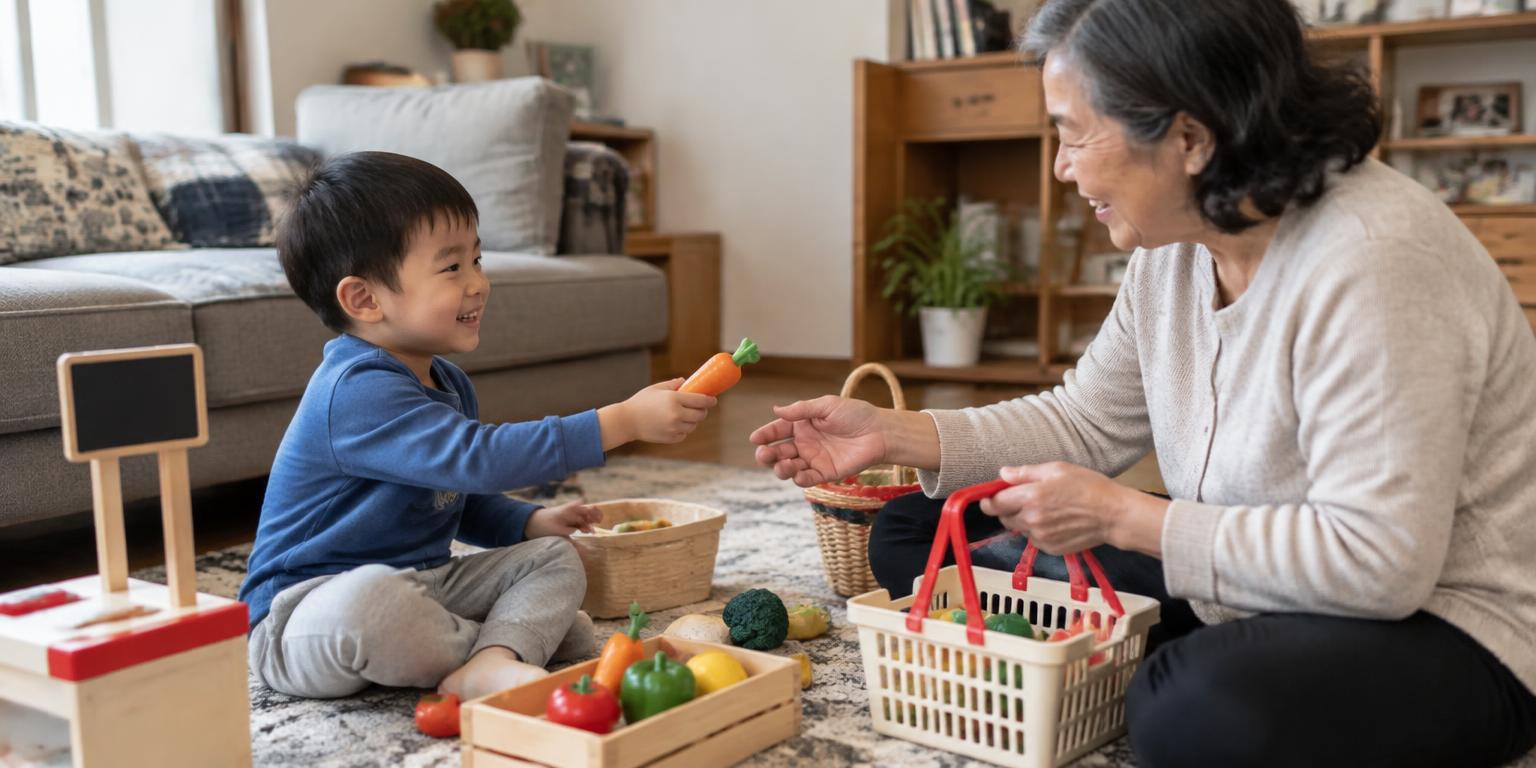
Your four-year-old lines up large toy foods and says, ‘This is my shop. You have to buy the moon!’ You have a few minutes to join them.
- Enter their idea: ‘A moon shop! Who am I in the story?’ Let your child decide whether you are the customer, helper or delivery driver.
- Use their safe props and ask one natural question: ‘What can I buy today?’ Avoid correcting the pretend prices or turning the game into a counting test.
- If they say they really visited the moon yesterday, distinguish gently: ‘That is a lovely pretend adventure. What did you do in real life yesterday?’ Do not label them a liar.
- If a real question appears—‘Why is the moon there?’—give a short truthful answer you know, or say, ‘I am not sure. We can look it up together later.’ Return to their story if that is what they want.
If it is still hard: Stop when either person wants to stop and keep small props away from younger children. If your child describes harm or unsafe touch, listen seriously and seek safeguarding advice; do not dismiss that account as make-believe.
Example: “Where do babies come from?”
Ask, “What are you wondering about?” A preschooler may only want to know where the baby was before birth. A short truthful answer might be, “A baby grows in a uterus, a place inside some people’s bodies.” Answer follow-up questions simply using an age-appropriate, reliable book when helpful. Avoid invented explanations, shame or overwhelming detail. Families form in different ways, including adoption and assisted reproduction; explain your family honestly without suggesting there is only one kind.
Let pretend roles stay voluntary
If a child wants to be the doctor, you can be the patient, but keep pretend examinations clothed and respect a stop. Dolls can be used for caregiving practice without inviting children to examine one another’s private parts. A child does not need expensive props or a long adult-led story: a box can be a bus and a few safe objects can be a shop. For children who prefer repetition or communicate differently, join their version of play rather than forcing a more elaborate plot.
Try it with play
Plan these with Pip Plus
Holidays & Seasons
Paper Bag Turkey Puppet Storytellers

Reading & Literacy
Fall Leaf Story Scramble

Quiet Time & Calm Corner
Snail Speed Story

Conversation & Connection
Car Color Hunt Storytelling

On-the-Go & Waiting
Pretend Package Delivery Debrief

Conversation & Connection