
Siblings & multi-age playFor: Toddler, Preschooler, School-age 4 min
Siblings: play that works for every age
How to set up one activity for a toddler and a big kid, and calm sibling squabbles.
The short version
Make room for each child's interests and abilities, with optional roles and an adult nearby to keep play safe.
Start here: the basics
What it is
This guide is about helping children of different ages play, share space and get along — and planning simple activities that can work for a baby, a toddler and an older child at the same time.
Why it matters
Sibling relationships are often among the longest relationships in a person's life. Playing together gives children practice with cooperation, patience, negotiation and empathy. Conflict is normal too; how adults guide it helps children learn to repair and try again.
What's happening at this age
Children play differently at different ages: babies watch and explore, toddlers often play side by side (parallel play), and preschoolers and school-age children begin cooperative play with roles and rules. Planning one activity with different 'jobs' for each age lets everyone join at their level.
Words you might hear
- Parallel play:
- Children playing next to each other with similar things, but not yet together.
- Cooperative play:
- Playing together toward a shared goal or story.
Set up play for mixed ages
It is okay if sibling play is short, messy or mostly side by side. You do not need every child enjoying the same thing in the same way. Begin with one shared interest and make space for different needs.
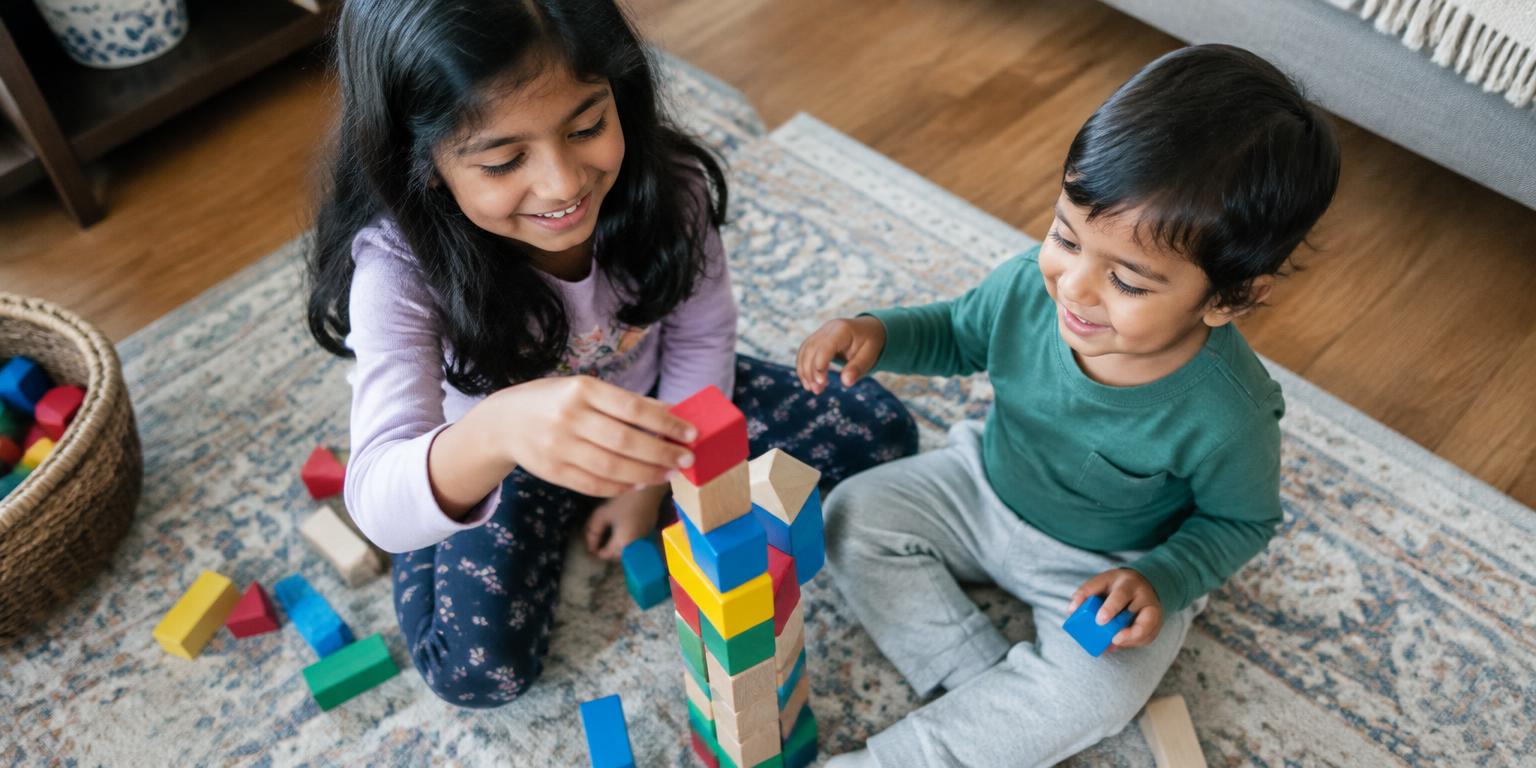
- Agree on roles first: build a tower intended for knocking down together, and protect projects the builder wants to keep.
- Offer optional roles such as storyteller or turn-counter; the adult, not the older child, remains responsible for supervision.
- Choose open-ended materials: blocks, water, playdough, dress-up.
- Give the younger child a safe version of the same tools.
- Keep small parts inaccessible to young children and anyone who mouths objects, including pieces used by older siblings.
When fights happen
- Stay calm and describe what you see: 'Two kids, one truck.'
- Once everyone is safe, help them hear each other and consider a fair solution; step in clearly if someone is being hurt.
- Protect the older child's special projects in a safe spot.
- Look for a small one-to-one moment with each child when you can — a chat, a shared page or a brief cuddle if wanted.
A new baby in the family
An older child may need extra closeness or return to earlier habits when a baby arrives. Offer reassurance and optional helper roles, and keep familiar routines where possible. New toilet accidents can also have physical causes; ask the clinician rather than assuming jealousy.
Example play-through: one build, different jobs
Your three-year-old and seven-year-old want to build together. The older child wants a tall tower; the younger keeps knocking down its base.
- Choose large shared blocks suitable for the youngest child and set up two building areas close together. Keep older children's small pieces out of reach.
- Ask each child what they want: ‘You want a tower, and you want a road. How could they connect?’ Do not make the older child responsible for teaching or supervising.
- Offer real, optional roles: one builds the tower; one makes a broad road beside it. You help with stability and stay close enough to protect the project and the children.
- If the younger child reaches to knock it over, stop gently: ‘This tower is staying up. You can knock down this separate stack.’ Ask before either child changes the other's work.
If it is still hard: If cooperation is not working, let them play separately with your support. Equal belonging does not require identical roles or constant joint play, and the older child does not always have to surrender their project.
Example: children at very different stages
In a pretend restaurant, a younger child can carry large safe pretend items while an older child creates a menu or takes orders. Both can opt out, and the older child is not responsible for supervising the younger one. Check materials against the youngest child’s needs: small counters, loose caps or beads must stay inaccessible. Shared play can be short, alongside rather than fully cooperative, or include an adult holding the story together. It need not look like a perfectly coordinated team activity.
A new baby changes needs, not just behavior
An older child may seek more help, feel jealous or return to an earlier habit. Acknowledge it: “You want time with me too.” Offer predictable one-to-one moments and optional helper roles without making loving the baby a duty. New toilet accidents can have physical causes and should not automatically be attributed to jealousy. If one sibling is repeatedly frightened, injured or controlled by another, intervene and seek support rather than treating it as ordinary rivalry or insisting they work it out.
Try it with play
Plan these with Pip Plus
Holidays & Seasons
Langar at Home: Share-a-Meal Seva

Holidays & Seasons
New Year Family Time-Capsule Jar

Holidays & Seasons
Papel Picado Family Banners

Life Skills
Family Napkin Folding Helper

On-the-Go & Waiting
Silent Sibling Semaphore

Conversation & Connection