Behavior & big feelingsFor: Toddler, Preschooler 4 min
Tantrums and the 'terrible twos': what causes them and what helps
Why toddlers melt down, and calm steps that help both of you through it.
The short version
Tantrums often reflect frustration or overwhelm. Keep everyone safe, offer calm support and teach later.
Start here: the basics
What it is
A tantrum is a burst of big emotion — crying, shouting, flopping, kicking — when a young child feels overwhelmed, frustrated or disappointed. The 'terrible twos' is a nickname for the season when tantrums often peak.
Why it matters
Tantrums are not a sign of bad parenting or a 'bad' child. They happen because a toddler's feelings are big while their language and self-control are still small. When you understand the cause, it becomes easier to stay calm, keep everyone safe, and slowly teach better ways to cope.
What's happening at this age
Tantrums commonly begin around 18 months and are often most frequent between ages 2 and 3, as children want more independence than they can manage. The brain areas for planning and calming down keep developing for many years, so children need your calm to borrow from — this is called co-regulation. Most children have fewer tantrums as language grows.
Words you might hear
- Co-regulation:
- When a calm adult helps a child's body and feelings settle, before the child can do it alone.
- Self-regulation:
- The slowly growing ability to manage feelings and actions independently.
What causes tantrums
A tantrum can leave both of you feeling worn out. A difficult moment does not define your child or your parenting; you can focus on safety and reconnect afterwards. Toddlers feel big emotions before the part of the brain that manages them is ready. Tantrums are most common between 1 and 4 years and are often triggered by being tired, hungry, overwhelmed or unable to say what they want.
Before: prevent the common triggers
- Keep naps and snacks predictable.
- Give warnings before transitions: 'Two more slides, then shoes.'
- Offer two choices you're happy with.
- Notice and praise calm moments.
During: keep everyone safe
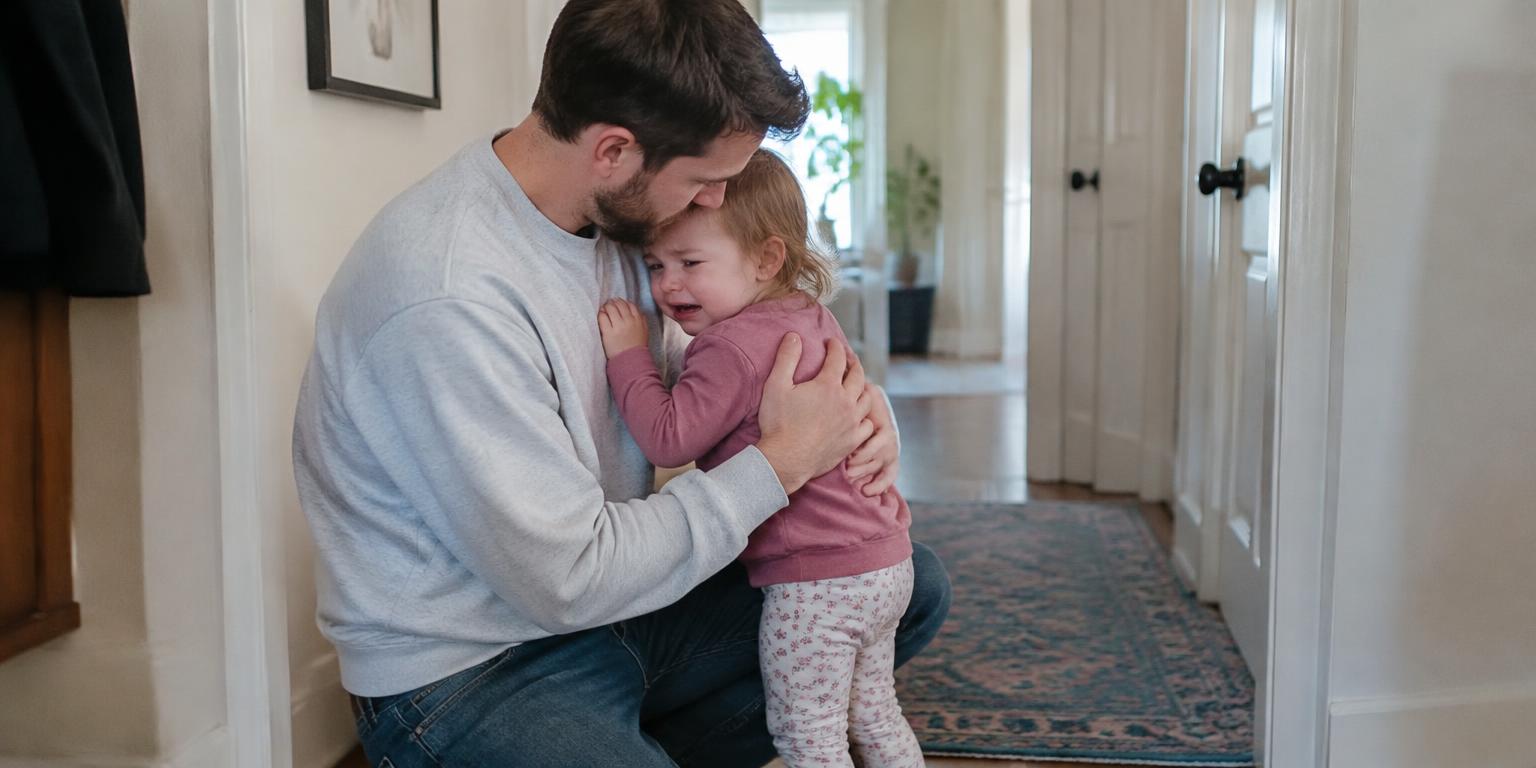
- Stay nearby, aim for a steady voice and keep words brief. If you lose your calm, return to safety and reconnect when you can.
- Move your child to a safe spot if they're hitting or throwing.
- You can keep a necessary limit and still offer comfort. Check hunger, pain or tiredness rather than treating every need as a demand.
- Name the feeling once: 'You're so sad we left the park.'
After: reconnect
Offer a hug if your child wants one, then a short, simple talk: 'You were really mad. Next time you can stomp your feet or squeeze a pillow.' The AAP advises against spanking or harsh words; they increase aggression over time.
Example play-through: no extra snack at the shop
Your two-year-old reaches for a snack at checkout. You say it is not in today's plan. They cry and drop to the floor near other shoppers.
- Move them away from immediate hazards and stay close. Say, ‘You wanted that snack. We are not buying it today.’ Keep the limit brief rather than explaining the budget during the upset.
- Offer comfort without changing the purchase decision: ‘I am here. Would you like my hand or for me to stay beside you?’ If they do not want touch, remain safely available.
- If they hit or try to run into danger, stop the unsafe action gently: ‘I will keep us safe.’ Leave the queue or shop if that is the safest manageable option.
- When calmer, give one next action: ‘We are going to the car. You can walk with me or have my help.’ Later, notice whether hunger, fatigue or a long shopping trip contributed and plan a simpler visit if possible.
If it is still hard: The crying may continue even when your response is kind and consistent. That is not proof the limit failed. Do not shame, threaten or physically punish; ask for support if episodes are persistently unsafe or difficult to manage.
Example: hitting during the meltdown
Protect the other person, move dangerous objects and stay close enough to prevent further harm. Say, “I will not let you hit.” Avoid threatening, restraining as punishment or insisting on eye contact. Once calmer, practice one replacement such as asking for help or moving away. Offer a hug only if wanted. Do not require a full explanation or apology while the child is overwhelmed; help with repair after they can participate. Persistent or severe harm needs an individualized safety plan.
Afterwards, notice the pattern and repair
Consider what preceded the episode: a missed nap, rushed transition, difficult instruction or sensory overload. Choose one preventable trigger to address. If you shouted, take responsibility without blaming: “I shouted. I am sorry. I will try a calmer voice.” Tantrums are not all caused by the same mechanism, and a calm parent cannot guarantee a calm child. Ask for help when episodes disrupt daily life or you cannot respond safely; do not wait for an exact duration threshold.
Try it with play
Plan these with Pip Plus
Parent Care
Micro-Moment of Mindfulness Tea

Building Character
Feelings Friend Puppets

On-the-Go & Waiting
Pocket Feelings Compass

Building Character
My Emotional Recipe: Mixing Feelings into Food

Movement
Red Light, Green Light Emotion Poses

Parent Care