
Health, sleep & safetyFor: Baby, Toddler, Preschooler 5 min
Preventing choking: foods, toys and what to do
AAP guidance on high-risk foods for under-4s, safe food prep, and gagging vs choking.
The short version
Prepare or avoid risky foods according to shape, texture and your child's skills; eating needs seated, attentive adult supervision.
Start here: the basics
What it is
Choking happens when food or a small object blocks a child's airway. Prevention means preparing food in safer shapes and sizes, keeping small objects out of reach, and staying with children while they eat.
Why it matters
Young children's airways are small, their chewing skills are still developing, and they explore by putting things in their mouths. Choking can happen quickly and quietly, so a few steady habits make a real difference. Knowing what to do in an emergency also helps you feel more prepared.
What's happening at this age
The AAP advises extra care with high-risk foods (such as whole grapes, hot dogs, nuts, popcorn and hard candy) until at least age 4, and with small toys and button batteries throughout the early years. Gagging is common and is part of learning to eat; choking is different and silent — this guide explains how to tell them apart.
Words you might hear
- Gagging:
- A noisy, protective reflex that pushes food forward; your child may cough, sputter or turn red but is still breathing.
- Choking:
- The airway is blocked; a child may be silent, unable to cry or cough, or turning blue. Call 911 and begin first aid.
High-risk foods for children under 4
You do not need to memorize every food risk at once. Start with the snacks your family uses most, prepare them carefully and share the plan with other caregivers. These precautions matter even during relaxed family moments.
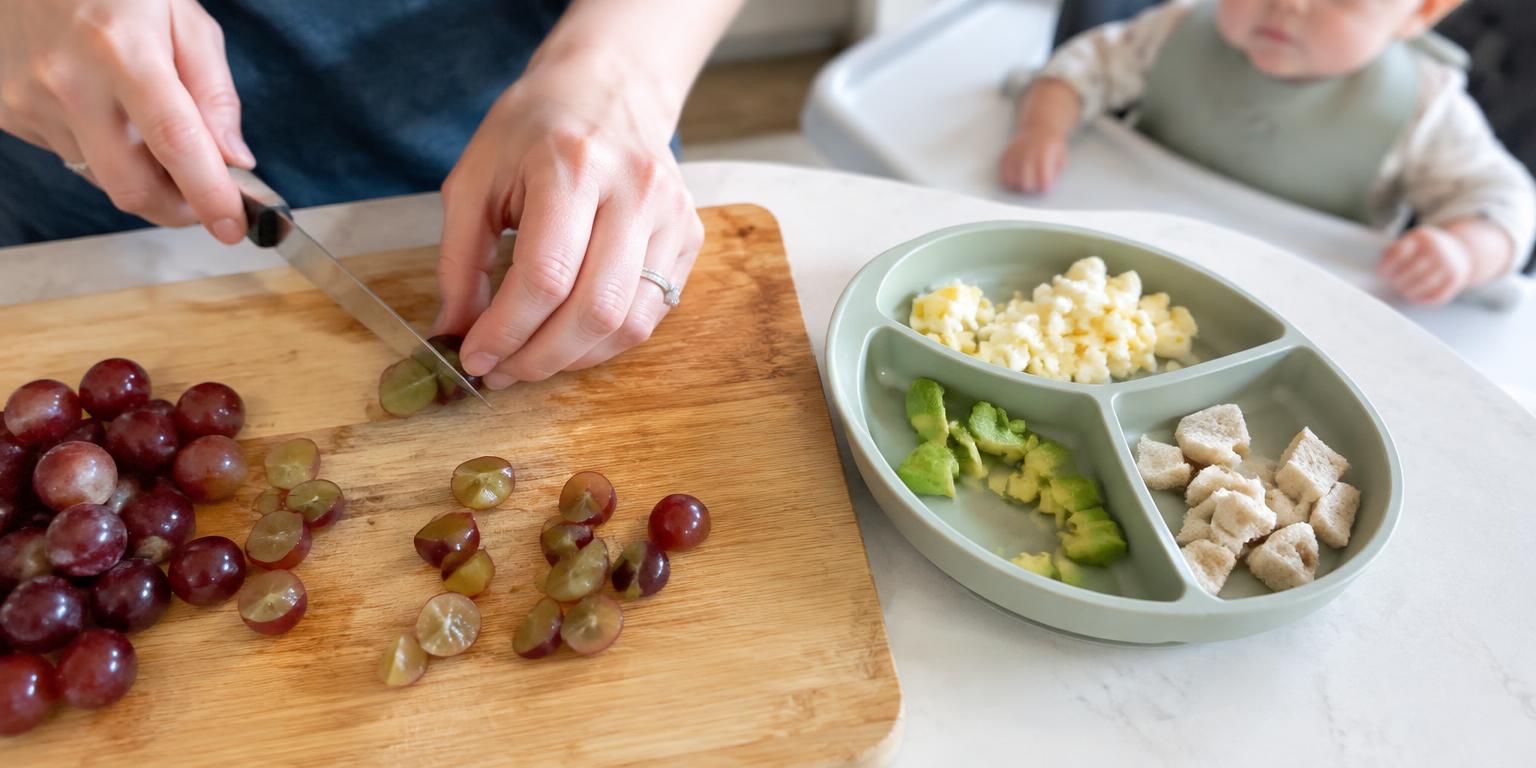
- Whole grapes and cherry tomatoes — quarter lengthwise and adapt further to the child's chewing skills. Prepare other fruit according to its shape and firmness; one cutting rule does not fit every food.
- Hot dogs and sausages — cut lengthwise, then into small pieces.
- Nuts, seeds, popcorn, hard or sticky candy, gum and marshmallows — avoid.
- Raw carrots, celery and apple chunks — cook until soft or grate thinly.
- Spoonfuls of nut butter — spread thinly instead.
Safe eating habits
- Eat sitting down — never while walking, playing or riding in the car.
- Offer small pieces and let your child chew and swallow before more.
- Keep coins, button batteries, magnets and small toy parts out of reach.
- Uninflated or broken balloons are a top choking risk for young children.
Gagging, coughing and choking
Gagging can occur while learning to eat, but sound alone cannot tell you a child is safe. If they are breathing and coughing forcefully, encourage coughing and watch closely. If they cannot breathe, cry, speak or cough effectively, call emergency services and use age-appropriate choking first aid from your training and the dispatcher's guidance. Do not wait for a color change or blindly sweep fingers inside the mouth.
Take a class
The AAP encourages parents and caregivers to learn infant and child CPR and choking first aid through a certified course (for example the American Red Cross or American Heart Association).
Example play-through: preparing a snack before play
Your toddler asks for grapes while running between the kitchen and living room. A visiting relative offers to hand them a few whole grapes.
- Stop the handover: ‘I will prepare those first. Whole grapes can block a young child's airway.’ Keep unprepared food out of reach while you get ready.
- Prepare the grapes in quarters lengthwise, with pieces appropriate for your child's eating skills; do not simply halve them across their width. Follow individualized clinician advice if your child has swallowing difficulties.
- Have your child sit upright in a stable seat before eating: ‘Snack is at the table. We can run again after we finish.’ Do not offer food while they run, lie down or play.
- Stay attentive while they eat and explain the same preparation and seated-eating rule to the relative. Keep small non-food objects away from the play area too.
If it is still hard: Preparation lowers risk but cannot eliminate it. If a child cannot breathe, cry or cough effectively, treat it as an emergency, call emergency services and use age-appropriate choking first aid if trained or as the dispatcher instructs. Do not do a blind finger sweep. Arrange proper first-aid training; this play-through is prevention, not a rescue lesson.
Example: noisy coughing versus trouble getting air
Gagging, effective coughing and choking are not interchangeable. A child who can cough effectively needs close observation; a child who cannot get air, cry or speak needs immediate emergency action. Sound alone is not a reliable test, and skin-color changes may be late or hard to recognize. If you are unsure about breathing or the child is deteriorating, call emergency services. Do not put fingers blindly into the mouth or delay help while looking for an online tutorial. Follow age-appropriate training and the dispatcher’s instructions.
Turn advice into household preparation
Ask caregivers to use the same safe-food plan and check floors and older siblings’ toys for small parts, loose batteries and magnets. Certified infant and child first-aid training is more useful than memorizing a short article. This guide intentionally does not try to teach emergency maneuvers: techniques differ by age and training. Suspected button-battery or magnet ingestion needs urgent medical guidance even if the child seems well; it is not only a choking issue and should not be watched at home.
Try it with play
Plan these with Pip Plus
Cooking & Baking
Classic Chocolate Chip Cookies

Cooking & Baking
Making and Coloring Cookie Dough Shapes

Cooking & Baking
Solar Oven S'mores: Cooking with Sunshine

Cooking & Baking
Jiggling Jello Lens Magnifying Glass Snack

Cooking & Baking
Cosmic Cookie Crumble Constellation Cartography

Holidays & Seasons