
Daily routinesFor: Baby, Toddler, Preschooler 4 min
Surviving the 'witching hour' before dinner
Small ways to ease a demanding part of the day, with safe play and a little breathing room for you.
The short version
Plan for the hard hour: a snack, a simple sensory station, and a job they can help with.
Start here: the basics
What it is
The 'witching hour' is a nickname for the late afternoon and early evening when babies and young children are often fussier, clingier or harder to settle — just when dinner, tired adults and busy households collide.
Why it matters
Knowing it is a common pattern can help you plan for it instead of blaming yourself. Small changes, like preparing earlier and lowering demands, can make this stretch of the day feel more manageable.
What's happening at this age
In newborns, evening fussiness often increases in the first weeks and tends to peak around 6 weeks before easing by about 3–4 months. Toddlers and preschoolers may also struggle in the late afternoon because they are hungry, tired and running low on patience after a full day.
Words you might hear
- Cluster feeding:
- Babies feeding very frequently over a few hours, often in the evening.
- Overstimulation:
- When noise, light and activity become too much for a child to process, leading to fussing.
Why late afternoon is hard
The end of the day can be demanding for you too. Children may be tired, hungry or needing connection just when dinner needs making. Start with one small way to lighten the load; a simple meal and a safe, familiar activity are enough.
90-second setups
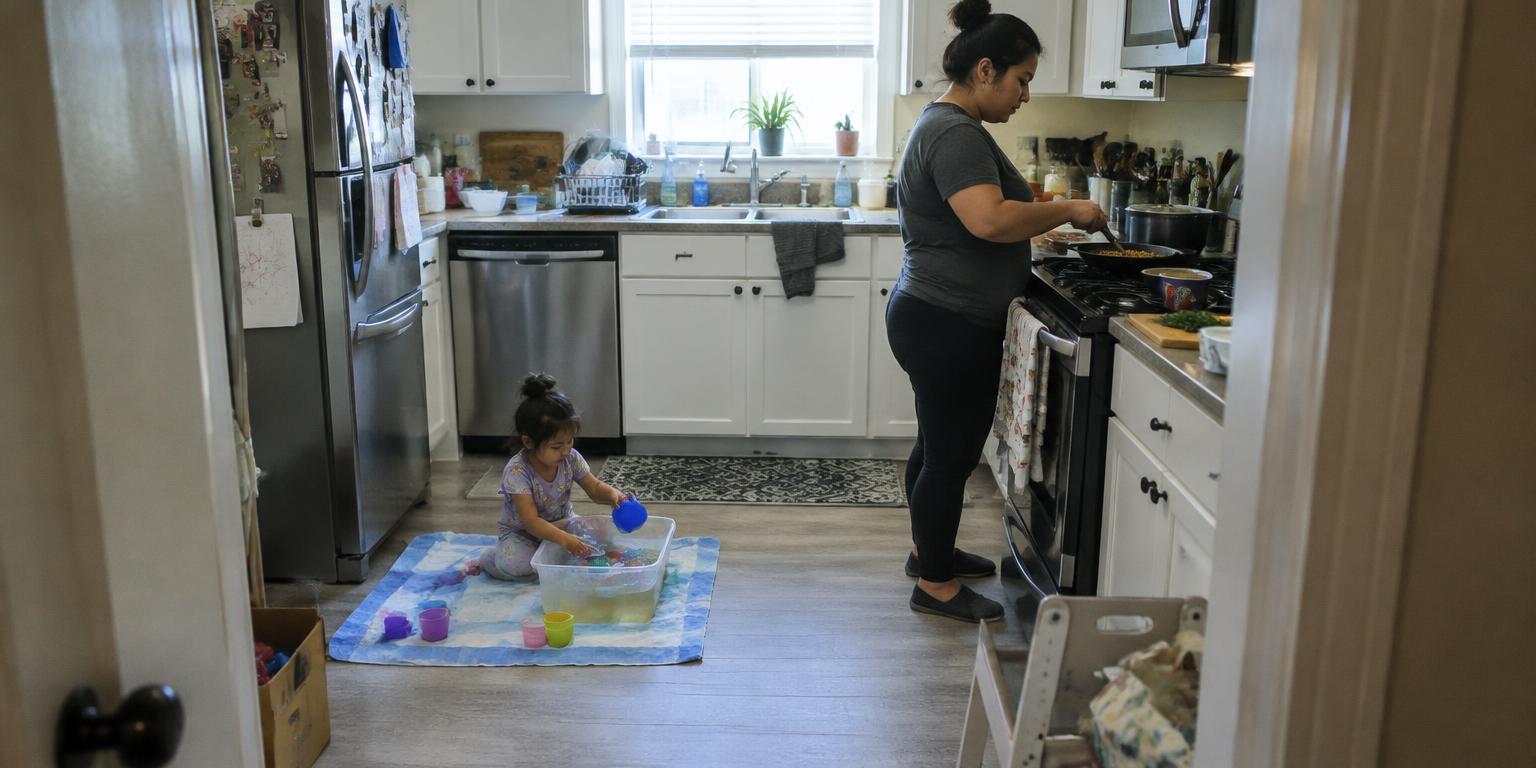
- Water play only when an adult can provide undistracted, within-arm's-reach supervision — not while cooking or handling hot pans. Otherwise choose safe dry play.
- Kitchen helpers: washing veggies, tearing lettuce, stirring.
- A 'dinner basket' of special toys only used at this time.
- An age-appropriate snack when needed, eaten seated and supervised; timing depends on your family's meals and the child's needs.
- Music and a 2-minute dance break before you start cooking.
Safety
Never leave a young child alone near water, even a shallow bin. Keep little hands away from the stove and pot handles turned inward.
Example play-through: everyone needs you before dinner
At 5 p.m., your toddler is crying near the kitchen doorway while your older child asks for help. Dinner is not ready, and you feel yourself getting sharper.
- Secure the immediate hazards first: keep children away from hot surfaces, knives and cooking equipment. Pause cooking if you cannot supervise safely.
- Name the moment kindly: ‘We are all tired. I am going to make this simpler.’ Offer water and a suitable snack if appropriate, rather than treating hunger as bad behavior.
- Give each child a manageable option in a safe place: the toddler can sit with a familiar book; the older child can choose a quiet activity nearby. Do not assign the older child responsibility for supervising the toddler.
- Simplify the meal or ask a capable adult for a specific task: ‘Can you stay with the children while I finish this?’ Once dinner is over, choose one change for tomorrow, such as an earlier snack or an easier meal.
If it is still hard: Some evenings will still be messy. A quieter plan is support, not a cure for every upset. Unusual crying, illness, feeding concerns or persistent distress deserves clinical discussion rather than being labeled the witching hour.
Example: a helper job becomes frustrating
A toddler can put napkins down or carry an unbreakable bowl; a preschooler might tear soft leaves at a separate safe spot. The job is participation, not unpaid kitchen efficiency. Say, “You can do this part while I do the hot part.” If the child loses interest, offer another suitable option rather than demanding they finish. Keep food preparation hygienic and eating seated and supervised; a child wandering through the kitchen with a snack is not a safe distraction.
Reduce the load rather than finding the perfect activity
Use a simpler meal, prepare part earlier or ask another adult to cover the transition when available. The hard hour can reflect adult exhaustion as well as the child’s hunger and need for connection. Infant evening crying is different from a preschooler needing something to do; check feeding, comfort and illness signs rather than offering toddler setups to a baby. If crying changes significantly or you feel unable to cope safely, seek help. No activity can make divided attention safe around water, heat or choking hazards.
Try it with play
Plan these with Pip Plus
Water Play
Warm Water Winter Paint

Water Play
Bubbling Water Volcanoes

Sensory Play
Layered Mud and Root Sensory Bag

Water Play
Water Balloon Partner Toss

Water Play
Fence Funnel & Pipe Water Wall

Water Play