
Behavior & big feelingsFor: Baby, Toddler, Preschooler 3 min
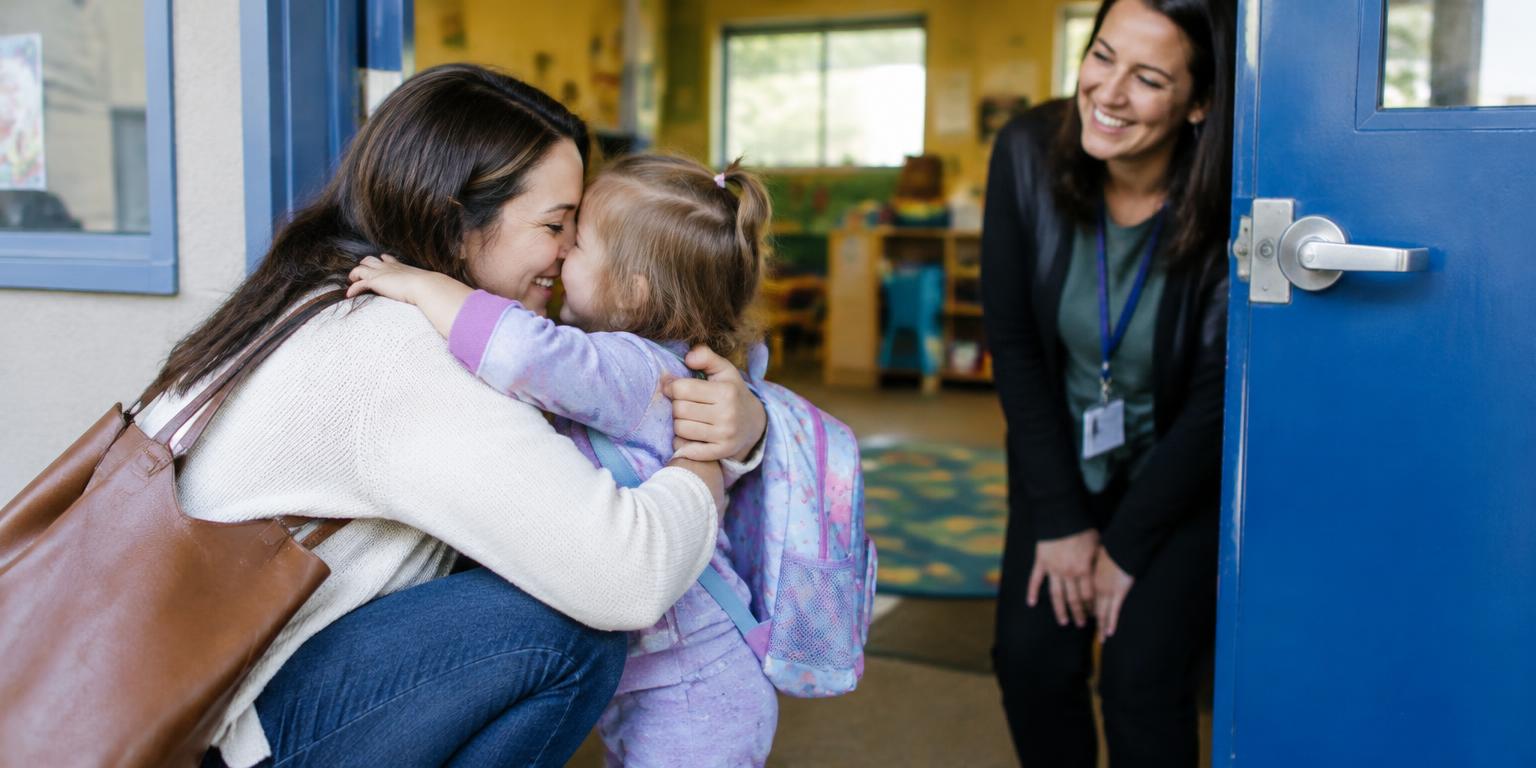
Separation anxiety and tearful goodbyes
Why babies and toddlers cling, and goodbye rituals that build trust.
The short version
Always say goodbye, keep it short and loving, and come back when you said you would.
Start here: the basics
What it is
Separation anxiety is the upset babies and young children feel when a trusted caregiver leaves — crying, clinging or protesting at goodbyes, bedtime or drop-off.
Why it matters
It can feel heartbreaking, but separation anxiety is actually a sign of a healthy bond. Your child has learned that you are special and has not yet fully learned that you always come back. Calm, predictable goodbyes help them build that trust.
What's happening at this age
It often appears around 8–10 months, as babies understand that people still exist when out of sight (object permanence), and may flare again around 15–18 months and at new transitions such as childcare or preschool. Most children grow more comfortable with practice and steady routines.
Words you might hear
- Object permanence:
- Understanding that people and things still exist when you cannot see them.
- Goodbye ritual:
- A short, repeated routine — like a hug, a phrase and a wave — that makes leaving predictable.
What's common
Tearful goodbyes can be hard on your heart as well as your schedule. You can offer a loving goodbye and work with your child’s caregiver on what helps afterwards. Separation distress can emerge in later infancy and change through toddlerhood and preschool. Timing and intensity vary with familiarity, fatigue, routines and other needs. It does not by itself measure attachment quality. Brief predictable goodbyes may help, while persistent distress deserves a closer look.
What helps
- Practice short separations at home first.
- Create a quick goodbye ritual: hug, kiss, a special wave.
- Don't sneak out — it can make clinging worse.
- For an older child, a familiar comfort item may help if the setting permits it; keep loose items out of infant sleep spaces.
- Tell them when you'll be back in their terms: 'after nap'.
Example play-through: tears at childcare goodbye
Your eighteen-month-old clings to your leg at childcare. A familiar caregiver is ready to take over, and you are due at work.
- Connect briefly: ‘You want me to stay. It is hard to say goodbye.’ Avoid promising there will be no tears or sneaking away when they look elsewhere.
- Explain the next step in simple terms: ‘Rosa will stay with you. I will come back after your afternoon snack,’ if that is your actual plan. Use a cue your child knows, not an exact clock time they cannot understand.
- Hand over directly to the familiar caregiver and confirm they are ready. Use the same brief goodbye—a wave, words or optional hug—without repeatedly leaving and returning.
- Ask the caregiver later how settling went and which support helped. At pickup, reconnect warmly without quizzing your child about why they cried.
If it is still hard: If distress remains intense, review a gradual settling plan and the care environment together. Tears alone do not prove an attachment problem, and persistent fear or concerns about unsafe care should never be dismissed as a normal phase.
Example: one parent can leave but another cannot
Children may respond differently depending on routines, tiredness, familiarity or recent changes. Try practice with a trusted caregiver during a calm, short separation and explain the return in terms the child understands. Do not sneak away to avoid tears or insist that a child accept touch from someone unfamiliar. If plans change, help the caregiver explain the change simply. Predictability is useful, but you do not need to promise exact timing that you cannot reliably meet.
Comfort and investigation can happen together
Validate the feeling while finding a practical next step: “You miss me. Your teacher will stay with you.” A familiar item may help an older child if the setting allows it; keep infant sleep spaces free of loose comfort items. Tearful goodbyes alone do not measure attachment quality. If fear is persistent, intense or linked to a particular person or place, listen carefully, check for unmet needs or harm and seek support. A short ritual is not a substitute for investigating a concerning pattern.
Try it with play
Plan these with Pip Plus
Holidays & Seasons
Pumpkin Patch Word Seek

Baby (0–12 months)
Month 7: Peekaboo & Object Permanence

Baby (0–12 months)
Where'd It Go? Object Permanence Play

Baby (0–12 months)
Hello, Goodbye Doorway Waves

Baby (0–12 months)
Nesting Cup Hide-and-Seek

Baby (0–12 months)